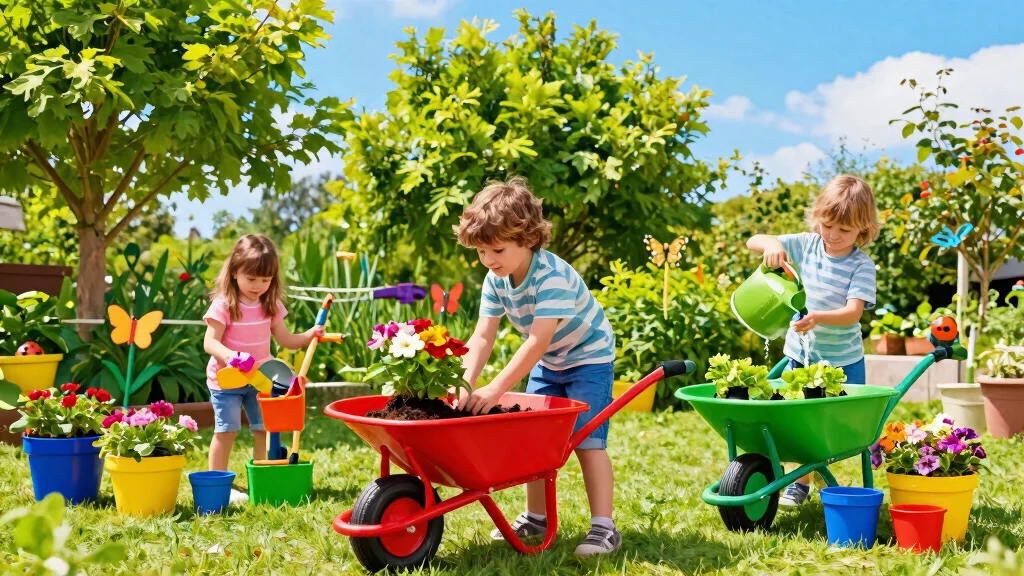
Gardening is a wonderful way for kids to connect with nature and learn valuable skills. This time of year always reminds me of the joy I felt planting seeds and watching them grow. If you’re someone who loves finding creative ways to engage children with the outdoors, this post is for you. It’s packed with fun and eco-friendly wheelbarrow garden ideas for kids that make planting not only educational but enjoyable.
These gardening projects are perfect for kids who love to dig in the dirt and get their hands a little messy. Each idea transforms a simple wheelbarrow into a vibrant garden, allowing children to explore plants, colors, and textures. You’ll discover a variety of hands-on gardening experiences that spark curiosity and encourage outdoor learning for kids. By the end, you’ll have seven delightful projects that are not only creative but also practical, ensuring that your little ones learn the basics of gardening while having a blast.
So grab a wheelbarrow, some soil, and your favorite seeds! Let’s dive into these wheelbarrow garden ideas for kids that will inspire a lifelong love for gardening and the environment.
Key Takeaways
– Discover seven fun and eco-friendly wheelbarrow garden ideas for kids that promote hands-on learning.
– Each project encourages outdoor learning for kids through engaging activities that enhance their understanding of nature.
– The ideas range from a mini flower garden to a sensory garden, catering to diverse interests and skill levels among children.
– These gardening activities not only teach kids about planting but also foster creativity and teamwork.
– Get practical tips and inspiration for creating memorable and educational gardening experiences with your kids.
1. Mini Flower Garden
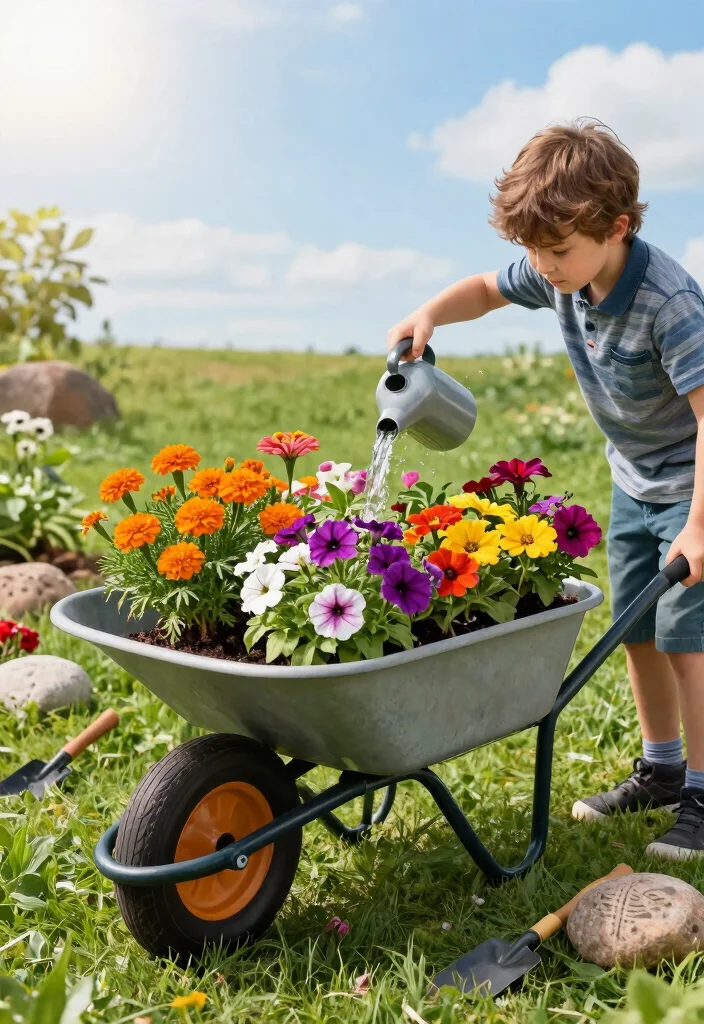
Building a mini flower garden in a wheelbarrow is a fun and engaging way for kids to explore gardening! Imagine the joy of vibrant blooms like marigolds, petunias, and zinnias, which can instantly capture their attention. Start with high-quality potting soil to create a healthy foundation for these colorful flowers.
Let the kids choose their favorite flowers, mixing and matching as they go. This activity sparks their creativity and introduces them to the role of pollinators, like bees and butterflies, in nature. Adding decorative stones not only enhances the garden’s look but also helps retain moisture, making it easier for the plants to thrive.
Key tips for a successful mini flower garden:
– Choose a variety of bright colors to keep their interest alive.
– Add stepping stones or a small border for extra charm.
– Discuss care routines and blooming seasons to deepen their understanding.
This mini flower garden is not just about planting; it’s an exciting journey into creativity and responsibility for kids!
Did you know wheelbarrow garden ideas for kids can spark pride with just 3-5 blooms in a small space? Let them pick marigolds, petunias, and zinnias; within 2 weeks, bees arrive, and learning blooms alongside the flowers.
2. Vegetable Patch Wheelbarrow
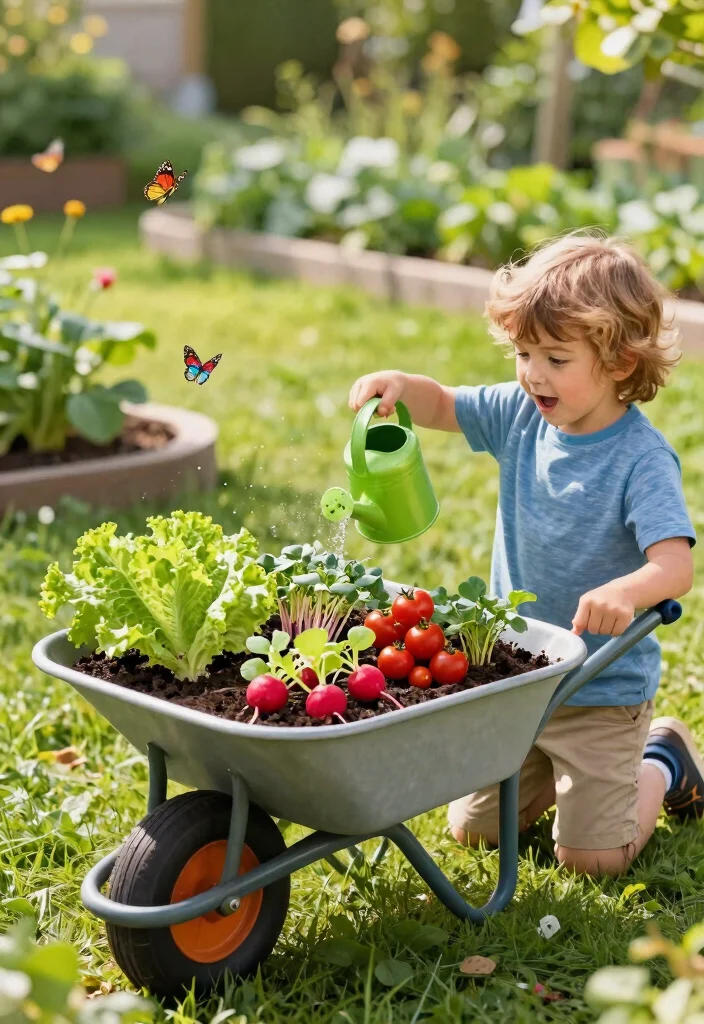
Creating a vegetable patch in a wheelbarrow can ignite a love for healthy eating in kids! Choose simple vegetables like lettuce, radishes, and cherry tomatoes that grow quickly, providing instant satisfaction. Start by filling the wheelbarrow with nutrient-rich soil, ready for planting.
Kids will enjoy digging and putting seeds in the soil, learning about patience and observation as they watch their plants sprout. Use this opportunity to discuss nutrition and where food comes from, intertwining fun with education. Regular watering and care will also instill a sense of responsibility in them.
Suggestions to enhance their gardening experience:
– Create labels for each vegetable to track growth.
– Use compost for a lesson in eco-friendly gardening.
– Encourage tasting their veggies to promote healthy habits.
This vegetable patch wheelbarrow turns gardening into a delightful adventure that blends learning with play!
3. Herb Garden on Wheels
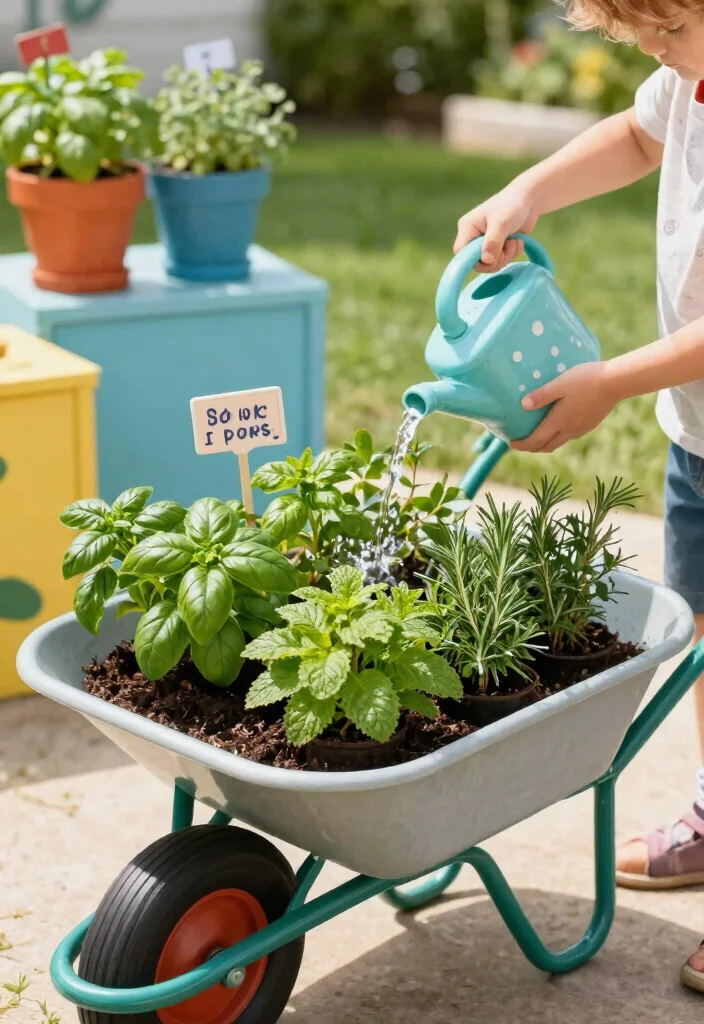
Herbs are a wonderful way to introduce kids to gardening, and a wheelbarrow makes for a unique growing space! Choose aromatic herbs like basil, mint, and rosemary that are easy to grow and useful in cooking. Kids will learn about flavors and how herbs can elevate meals.
Start by filling the wheelbarrow with potting soil, allowing children to carefully plant each herb. Encourage them to monitor their herbs’ growth and find opportunities to use their harvest in simple recipes, like flavorful herb-infused water or fresh salads. Using pots for each herb teaches them about plant spacing and care requirements.
Unique insights for a successful herb garden:
– Add small signs for each herb to aid in plant identification.
– Get them involved in meal planning using their fresh herbs.
– Discuss the advantages of fresh versus dried herbs for cooking.
This herb garden not only nurtures gardening skills but also inspires culinary creativity in a fun and engaging way!
4. Fairy Garden Wheelbarrow
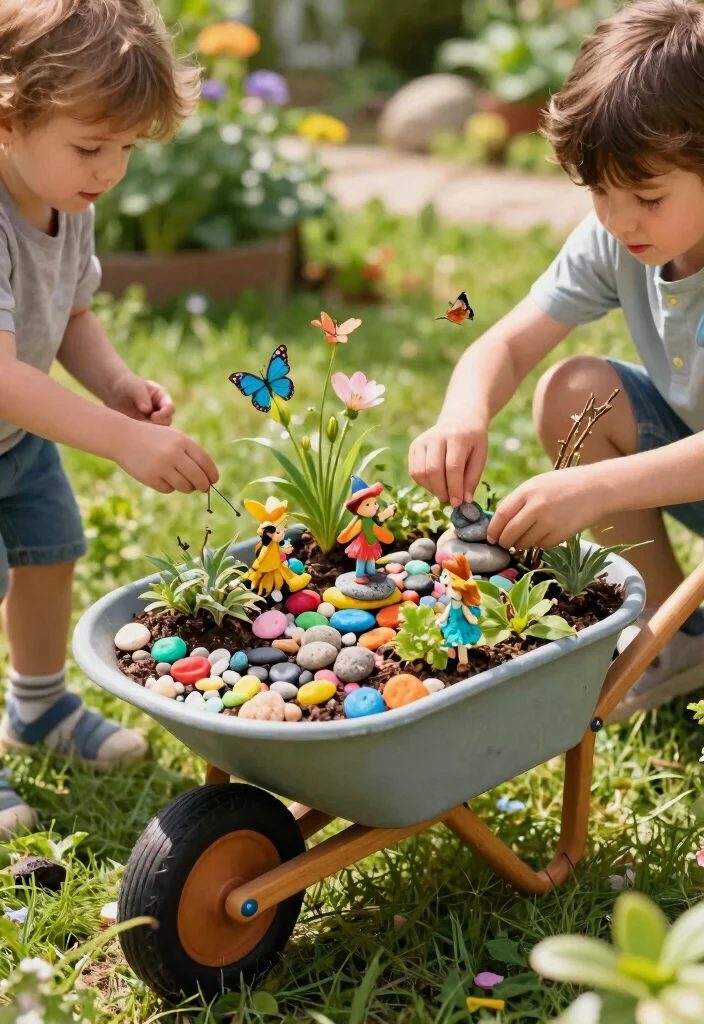
Transforming a wheelbarrow into a fairy garden can unleash a child’s imagination! Gather tiny plants, colorful pebbles, and miniature fairy figurines to create a magical landscape. Start by filling the wheelbarrow with soil and letting the kids arrange the plants however they like.
Encourage them to create little pathways with colorful stones leading to hidden fairy spots. This project invites endless creativity and storytelling, where kids can weave tales about their fairy friends. You can even make it seasonal, changing plants and decorations to reflect different times of the year, keeping the adventure alive.
Helpful tips for a magical fairy garden:
– Use natural materials like twigs and pinecones for decoration.
– Let kids choose their favorite small figurines to personalize their garden.
– Read fairy tales to enrich their storytelling experience.
This enchanting fairy garden merges gardening with creativity, providing kids with a hands-on experience that celebrates their imagination!
Fun fact: transforming a wheelbarrow into a fairy garden is wheelbarrow garden ideas for kids, sparking creativity as they arrange plants, pebbles, and fairy figurines to build tiny story worlds. Pro tip: start with a shallow soil layer and let little hands design winding stone paths.
5. Pollinator-Friendly Wheelbarrow Garden
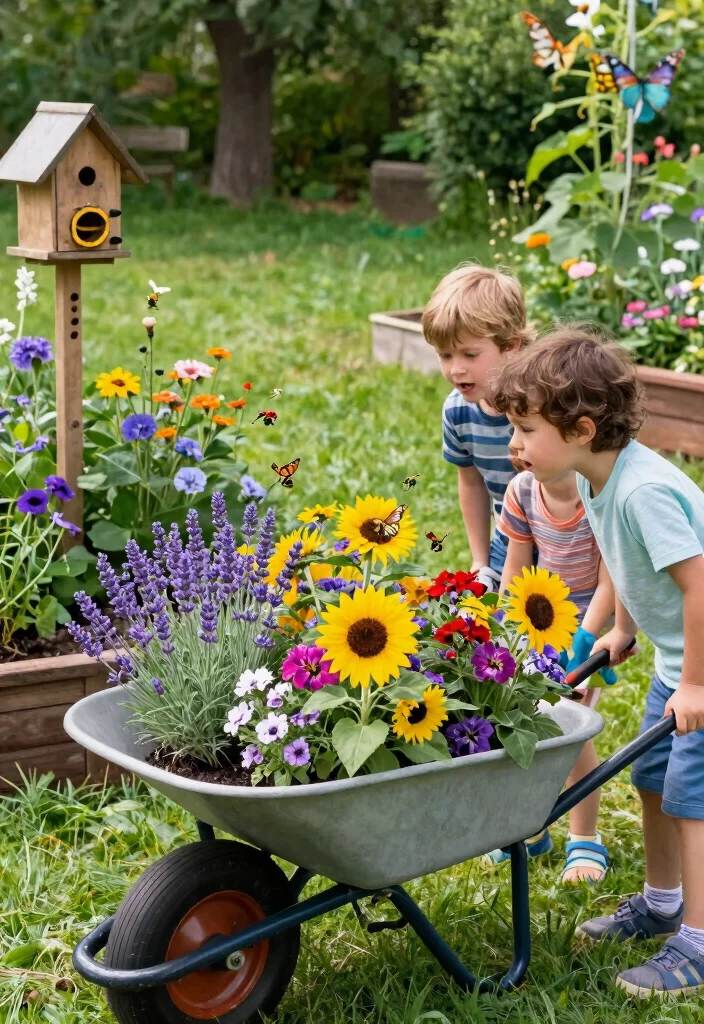
Creating a pollinator-friendly garden in a wheelbarrow is a fantastic way to teach kids about the vital role of bees, butterflies, and other pollinators! Select plants like lavender, coneflowers, and sunflowers that attract these helpful creatures. Not only do these colorful blooms enhance the garden, but they also educate children about ecosystems and biodiversity.
Start by using quality soil and help them plant their chosen flowers. Kids can observe the different pollinators visiting their garden, gaining insight into nature’s cycles. Encourage them to keep a journal of the insects they spot, adding a layer of learning to the experience.
Unique suggestions for attracting pollinators:
– Incorporate a bee house or butterfly feeder nearby.
– Discuss the crucial role of pollinators in food production.
– Plan a flower arrangement activity with their blooms when ready!
This pollinator-friendly garden offers an exciting, interactive way for kids to appreciate nature while enjoying the gardening process.
How To Choose the Right Wheelbarrow for Your Kids’ Garden
Choosing the right wheelbarrow for your children’s gardening activities can make planting a fun and educational experience. Here are some key factors to consider when selecting a wheelbarrow that suits their needs.
1. Size
The size of the wheelbarrow is essential. For kids, a smaller, lightweight model is best. It should be easy for them to maneuver while still being large enough to carry soil and plants. Look for a wheelbarrow that is about 2-3 cubic feet in capacity. This size allows kids to transport materials without feeling overwhelmed.
2. Material
Consider the material of the wheelbarrow. Most are made from either plastic or metal. A plastic wheelbarrow is lighter and less prone to rust, making it a great choice for kids. Metal wheelbarrows are sturdier but can be heavier. If you choose metal, make sure it has a rust-resistant coating to keep it looking good after years of outdoor use.
3. Features
Look for features that enhance usability. A wheelbarrow with two wheels provides more stability and is easier for children to balance. Also, check for a comfortable grip on the handles. Some models come with padded grips to protect little hands. Additional features like a tipping bucket can make unloading easier and more fun.
4. Budget
Set a budget before you start shopping. Wheelbarrows for kids can range in price from $30 to $100, depending on size and materials. For a beginner garden, you may want to start with a more affordable option. However, investing in a durable wheelbarrow will pay off in the long run as your kids grow and take on more gardening projects.
5. Safety
Safety should always come first. Check for any sharp edges or potential pinch points on the wheelbarrow. Some models may also include safety features like a brake or a sturdy base to prevent tipping. Make sure it can support the weight your child will be lifting and moving.
6. Design
Lastly, consider the design and color. A fun, colorful wheelbarrow can make gardening more appealing for kids. Look for themed designs or patterns that match your child’s interests. A visually appealing wheelbarrow can ignite their enthusiasm and encourage them to spend more time outdoors.
Pro Tip: Involve your kids in the selection process. Let them pick their favorite colors or designs. This encourages ownership and makes them more excited about gardening activities!
With these points in mind, you’ll be well-equipped to choose the perfect wheelbarrow for your kids. This will not only enhance their outdoor learning experiences but also foster a lifelong love for planting and nurturing nature.
6. Sensory Garden Wheelbarrow
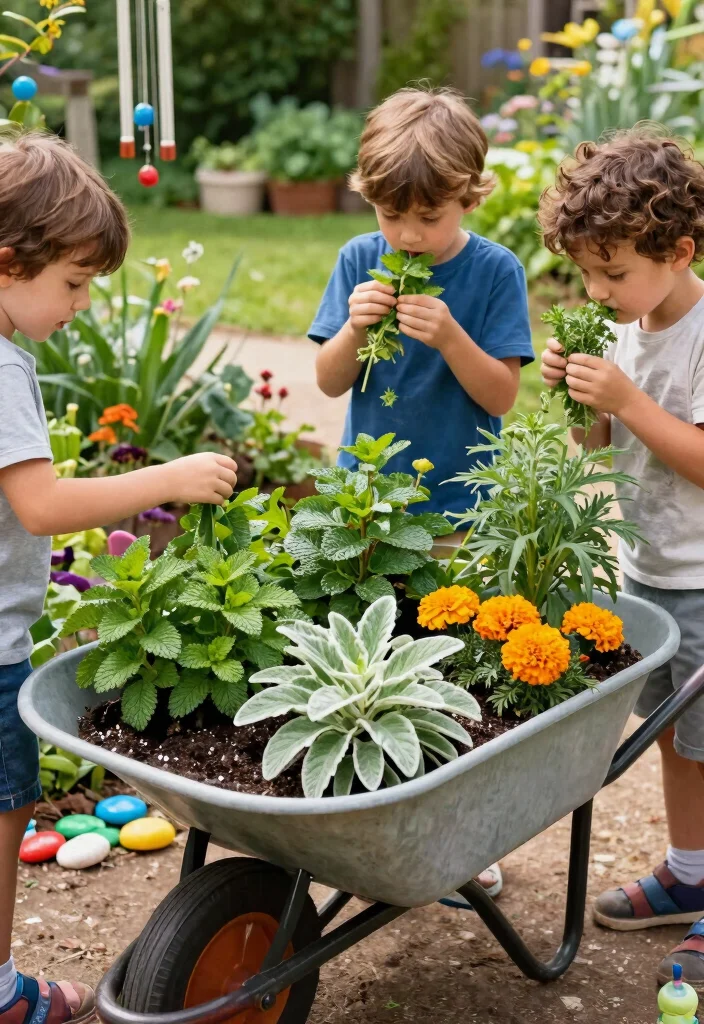
A sensory garden wheelbarrow is an incredible way for kids to engage with various textures, smells, and colors! Include plants with unique scents like mint or thyme, alongside soft textures like lamb’s ear and bright flowers such as marigolds. Fill the wheelbarrow with a diverse selection of plants for a rich sensory experience.
Kids will love touching the leaves, smelling the herbs, and enjoying the beautiful colors. This hands-on activity helps them connect with nature through their senses. You can provide small gardening tools to enhance interaction and discuss how different senses relate to the plants.
Ideas to enrich the sensory experience:
– Create a checklist for them to record what they can smell, touch, and see.
– Play games like ‘find the softest leaf’ to make it fun.
– Include decorative items like wind chimes for added sensory stimulation.
The sensory garden wheelbarrow makes gardening an exciting exploration, turning it into an engaging and educational experience!
7. Crafty Wheelbarrow Planters
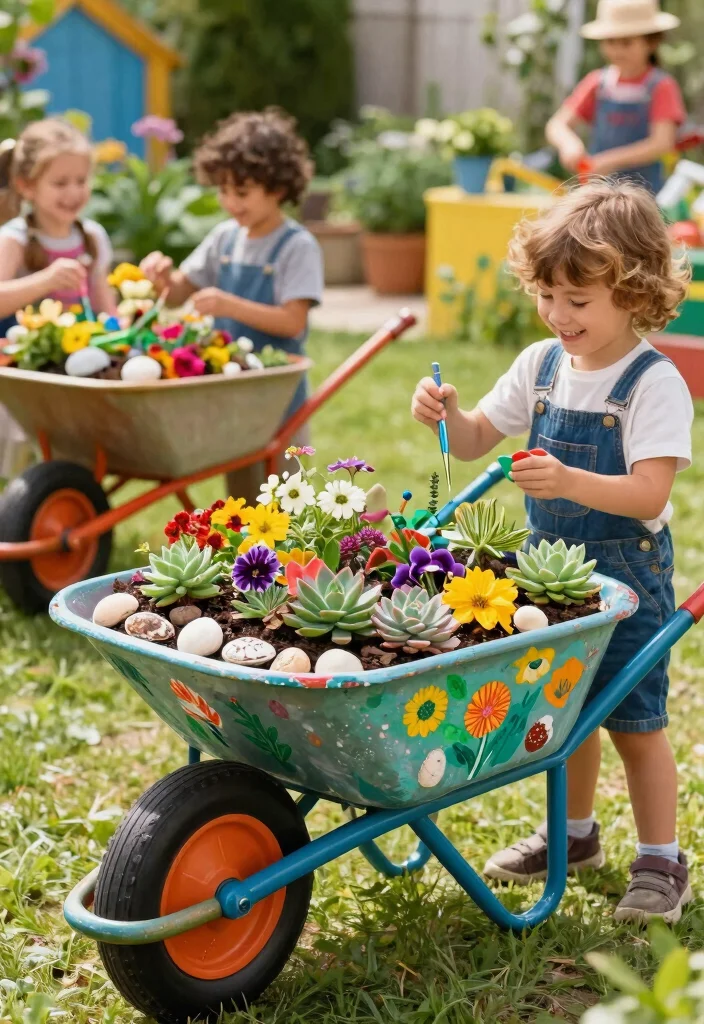
Let’s get creative! A wheelbarrow serves as an excellent base for unique planters. Kids can paint or decorate their wheelbarrow with eco-friendly paints, expressing their creativity while learning about recycling. Once decorated, fill it with a mix of soil and plants like flowers, succulents, or herbs.
Discuss the concept of upcycling, encouraging children to think about reusing materials in gardening. This project also promotes teamwork if done as a group activity, fostering collaboration and creativity.
Suggestions for crafty planters:
– Use natural materials like stones or shells for decoration.
– Organize a community garden day for kids to showcase their planters.
– Encourage them to write a story about their decorated wheelbarrow’s purpose.
These crafty wheelbarrow planters provide a fun twist on gardening, teaching kids about resource stewardship and the joy of nature!
Did you know upcycling a wheelbarrow into a planter can cut waste by 30% in one project? Kids learn recycling, teamwork, and garden care while bringing wheelbarrow garden ideas for kids to life.
Conclusion
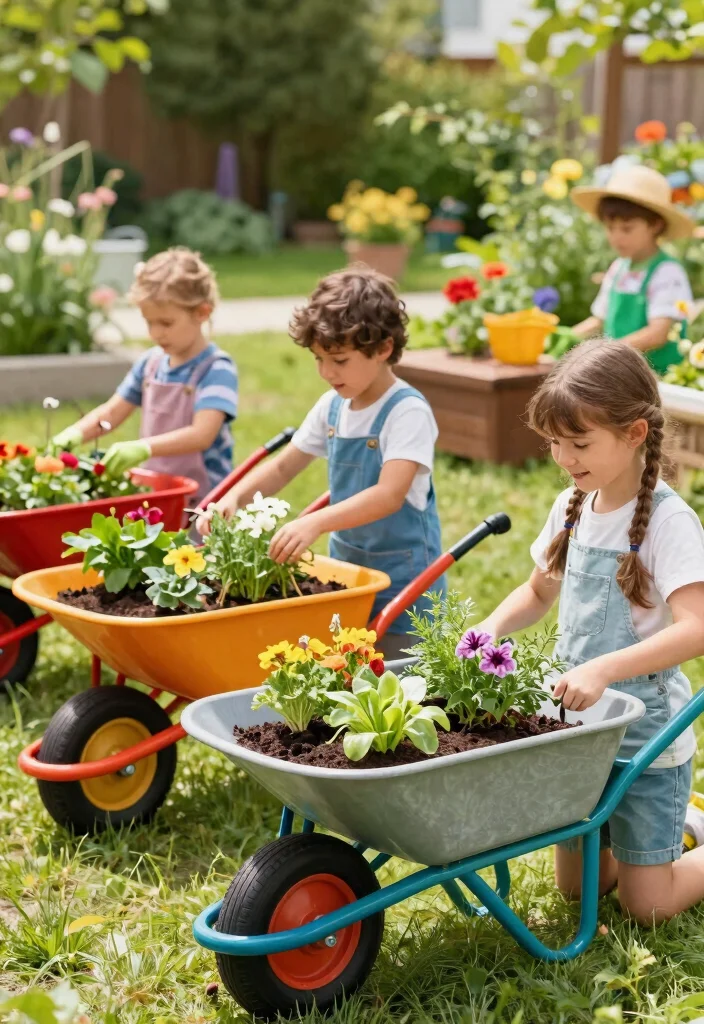
Gardening with kids is not just a fun activity; it’s a pathway to learning, creativity, and appreciation for nature.
These wheelbarrow garden ideas not only foster essential gardening skills but also promote environmental awareness and responsibility.
Each project enriches their understanding while providing hands-on experiences that they will cherish for years to come. So grab a wheelbarrow and let the gardening adventures begin!
Note: We aim to provide accurate product links, but some may occasionally expire or become unavailable. If this happens, please search directly on Amazon for the product or a suitable alternative.
This post contains Amazon affiliate links, meaning we may earn a small commission if you purchase through our links, at no extra cost to you.
Frequently Asked Questions
What are the best wheelbarrow garden ideas for kids to learn planting?
Here are some beginner-friendly wheelbarrow garden ideas for kids to spark planting confidence and outdoor learning for children:
1) Mini herb garden: plant basil, chives, and lettuce in a small wheelbarrow. Let kids dig, plant, and water, then watch daily growth. Label herbs with colorful sticks to build early reading skills.
2) Seed-starting station: fill with seed-starting mix, sow seeds, and keep a simple growth tracker. Move the barrow to a sunny spot as needed.
3) Themed color plots: paint the wheelbarrow in bright colors and assign sections to color groups (red tomatoes, yellow marigolds). Kids map locations and record progress in a garden journal.
4) Sensory wheelbarrow: fill with soil, mulch, and pebbles to explore texture and soil health. Include a kid-sized trowel and a small bug-friendly patch to observe insects.
5) Fun planting ideas with quick results: choose fast-growing crops like radishes or lettuce so kids see progress quickly and stay motivated.
How can wheelbarrow gardening become a safe and fun kids gardening project?
Safety first makes learning stick. Start with a light, kid-sized wheelbarrow and non-slip shoes, and always supervise young children. Break tasks by age: toddlers can scoop soil, older kids can transplant seedlings. Use gardening tools for kids like small trowels and watering cans. Create a dedicated, low-traffic zone and teach proper lifting to avoid strains. Bring water for hydration, apply sunscreen, and wear hats for sun safety. Finish with a quick cleanup ritual to reinforce responsibility and care for the garden.
What are some creative gardening activities using a wheelbarrow that teach kids about plants and sustainability?
Turn wheelbarrow play into learning with these creative gardening activities: a wheelbarrow relay to move soil between beds, a plant-label scavenger hunt, and a kid-friendly garden journal to track plant growth. Have kids measure plant height over time and compare it to their notes. Set up a tiny ‘pollinator corner’ with flowering plants to discuss ecosystem roles. Use the wheelbarrow to transport compost materials weekly and talk about recycling waste into healthy soil—perfect for outdoor learning for children.
What gardening tools and safety tips should I use when kids help with wheelbarrow gardening?
Equip the project with age-appropriate gear: gardening tools for kids (small trowel, hand rake, watering can) and gloves. Teach safe handling, balance the load in the wheelbarrow to prevent tipping, and keep tools within reach but stored safely after use. Choose a smooth, clear path to the bed, wear sturdy shoes, and apply sunscreen. Supervision is key, and start with short sessions that gradually lengthen as kids gain confidence.
How can wheelbarrow garden ideas support outdoor learning for children and help develop skills?
Wheelbarrow garden ideas blend practical gardening with learning across subjects and skills. They support outdoor learning for children by linking math (counting seeds, measuring areas), science (germination, soil health), and literacy (garden journals). They also boost motor skills (mixing, carrying, planting) and social skills through teamwork. Plan simple lessons, set a predictable routine, and encourage kids to document discoveries and reflections in a garden notebook.