![9 Modern Concrete Raised Garden Bed Ideas [Built to Last]](https://homedreamly.com/wp-content/uploads/2026/04/9-Modern-Concrete-Raised-Garden-Bed-Ideas-Built-to-Last.webp)
Gardening has become a passion for many, especially those living in urban areas where space is limited. The idea of creating a thriving garden in a small space can feel daunting. If you’re someone who loves to dig into sustainable gardening options, then you’re in the right place. This blog post brings you fresh inspiration for concrete raised garden bed ideas that are not only stylish but built to last. Whether you’re a seasoned gardener or just starting out, these ideas will help you maximize your outdoor space.
Concrete raised garden beds are an excellent solution for urban gardeners who want to add a modern touch to their landscape. They offer durability and versatility, allowing you to experiment with various designs. In this post, you’ll discover nine innovative ideas that will transform your gardening experience. From minimalist designs to multi-section beds, there’s something here for everyone. You’ll learn how to create stunning, functional spaces that not only look great but also stand the test of time.
Let’s dig into these durable raised beds that complement any garden aesthetic while promoting sustainable practices. Each idea will provide you with actionable tips and inspiration to create your own outdoor oasis. Get ready to elevate your gardening game!
Key Takeaways
– Stylish and Durable: Concrete raised garden beds not only look modern but are also built to withstand the elements, making them a lasting addition to your garden.
– Variety of Designs: Explore different styles like minimalist rectangles, geometric patterns, and tiered beds that cater to various tastes and spaces.
– Functional Features: Incorporate features such as built-in seating and vertical gardens to maximize space and enhance usability in urban settings.
– Sustainable Options: Learn how to use eco-friendly materials and practices to make your gardening efforts both stylish and environmentally conscious.
– Practical Tips: Each idea comes with actionable advice to help you implement these designs in your own backyard or patio, creating a personalized touch to your gardening journey.
1. Minimalist Concrete Rectangle Beds
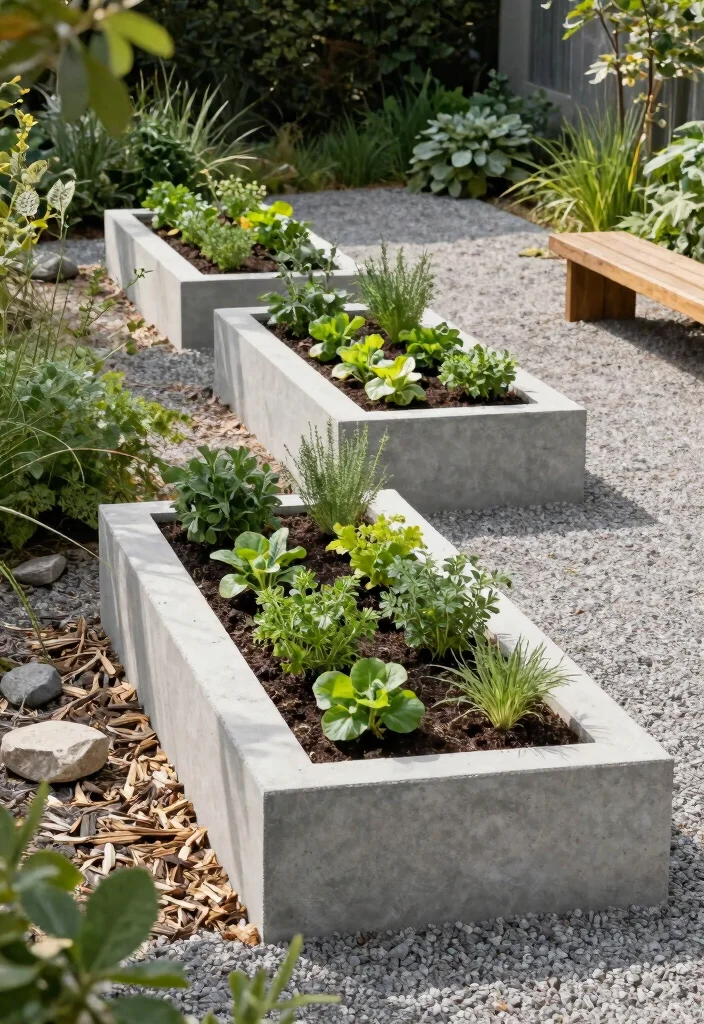
Looking for a stylish and functional way to elevate your garden? Minimalist concrete rectangle beds offer a sleek and modern aesthetic that fits perfectly in any outdoor setting. Their simple design not only looks great but also provides ample room for various plants, from vibrant herbs to fresh vegetables.
These beds are low-maintenance and can be customized to different heights, making gardening accessible for everyone. For added efficiency, consider incorporating drainage holes to prevent water accumulation and keep your plants thriving.
Key features to consider:
– Create a uniform look with multiple beds lined up
– Use contrasting materials like wood chips for an appealing finish
– Seal the interior with a weatherproof coating for added longevity
With these minimalist beds, you’ll have a stunning garden that’s easy to care for and delivers a fresh bounty.
2. Geometric Patterns for Visual Appeal
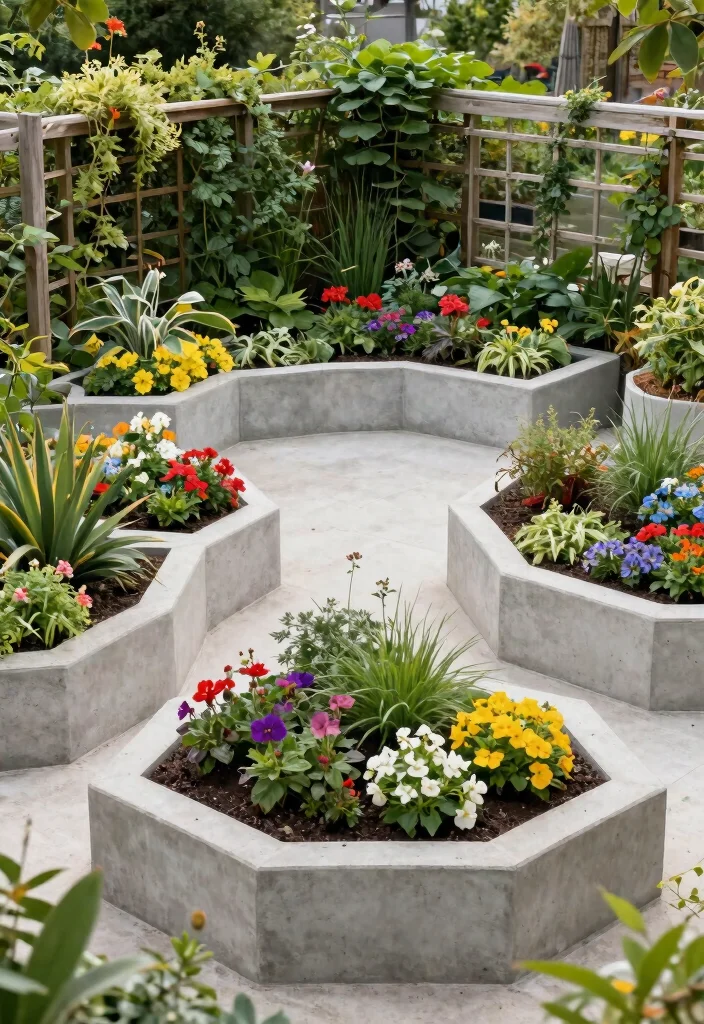
Want to add a unique flair to your garden? Geometric concrete raised beds can transform your space into a visually striking landscape with their eye-catching shapes. From hexagons to triangles, these beds can be arranged in dynamic configurations that enhance your garden’s appeal.
Beyond their artistic value, geometric beds improve air circulation and maximize your planting area. You can even add climbing plants on the edges to create a vibrant and functional garden space.
Here’s how to enhance your design:
– Experiment with different shapes for a creative layout
– Use contrasting concrete colors to highlight specific areas
– Incorporate vertical elements for added dimension
These geometric patterns will not only beautify your garden but also create a harmonious environment for your plants.
3. Concrete Planters with Built-in Seating
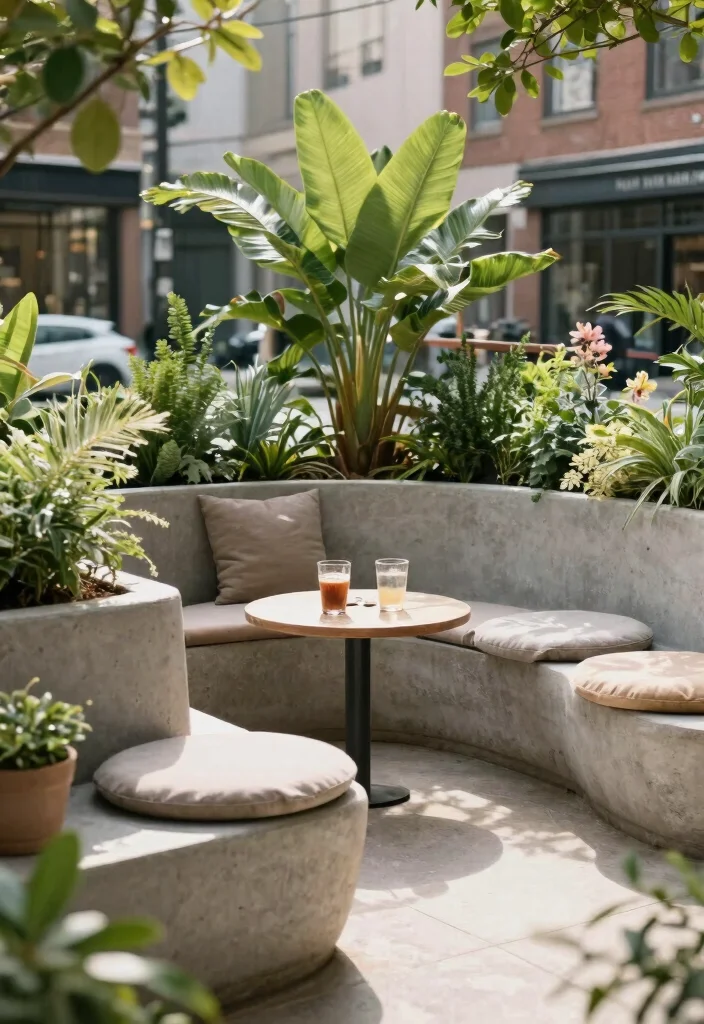
Imagine enjoying a cozy spot in your garden while surrounded by lush greenery! Concrete raised beds that include built-in seating blend functionality with comfort, making them ideal for urban spaces. These multi-purpose structures allow you to relax while tending to your plants.
Design your beds with flat, broad tops that double as benches for a welcoming atmosphere. Add weather-resistant cushions for extra comfort, transforming your garden into a favorite hangout spot. Position these beds strategically along a patio for easy access to your plants during gatherings.
Here are some ideas to maximize enjoyment:
– Integrate shade features like umbrellas for sunny days
– Use decorative pillows for a personal touch
– Arrange seating for both relaxation and gardening ease
With these innovative designs, your garden will become a delightful retreat for both you and your guests.
Key Trade-offs & Our Top Pick
Option 1: Minimalist Concrete Rectangle Beds
– Pros:
– Simple design that fits any space.
– Easy to construct and maintain.
– Cons:
– Limited aesthetic appeal for some gardeners.
– May not maximize planting area in smaller spaces.
– Best for: Those who want a straightforward, functional garden bed without extra frills.
Option 2: Geometric Patterns for Visual Appeal
– Pros:
– Adds a modern touch to your garden.
– Offers unique shapes that can become focal points.
– Cons:
– More complex to build and may require professional help.
– Can be more expensive due to design intricacies.
– Best for: Gardeners looking for a trendy design that stands out.
Option 3: Concrete Planters with Built-in Seating
– Pros:
– Combines functionality with comfort; great for social spaces.
– Saves space by integrating seating and planting areas.
– Cons:
– Heavier and harder to move once installed.
– Requires careful planning to ensure comfort and usability.
– Best for: Urban gardeners who want to create a multifunctional area for relaxation.
Option 4: Tiered Concrete Beds for Elevation
– Pros:
– Provides better drainage and visibility for plants.
– Can accommodate different plant types and heights.
– Cons:
– May require more materials and time to build.
– Limited access for maintenance on the upper tiers.
– Best for: Those with a variety of plants looking to maximize sunlight and drainage.
Option 5: Curved Concrete Beds for Softness
– Pros:
– Softens the hard look of concrete, creating a friendly atmosphere.
– Can follow the natural contours of your yard.
– Cons:
– More complex and time-consuming to construct.
– May lose some planting space in the curves.
– Best for: Gardeners wanting to blend their beds harmoniously with natural surroundings.
Expert Recommendation:
Best Overall: Minimalist Concrete Rectangle Beds
For most gardeners, minimalist concrete rectangle beds are the top pick. They offer excellent value for money, providing a solid and durable option for planting without unnecessary complexity. Their simplicity allows you to customize with plants, making them versatile across various garden styles. Plus, the ease of construction means you can set them up quickly and enjoy planting in no time!
Why We Picked This:
We chose minimalist rectangle beds for their broad appeal, but each option has its strengths. If you love a modern aesthetic, geometric patterns might be your go-to. For those seeking multifunctionality, concrete planters with seating are ideal. Ultimately, your choice should reflect your gardening needs and personal style.
4. Tiered Concrete Beds for Elevation
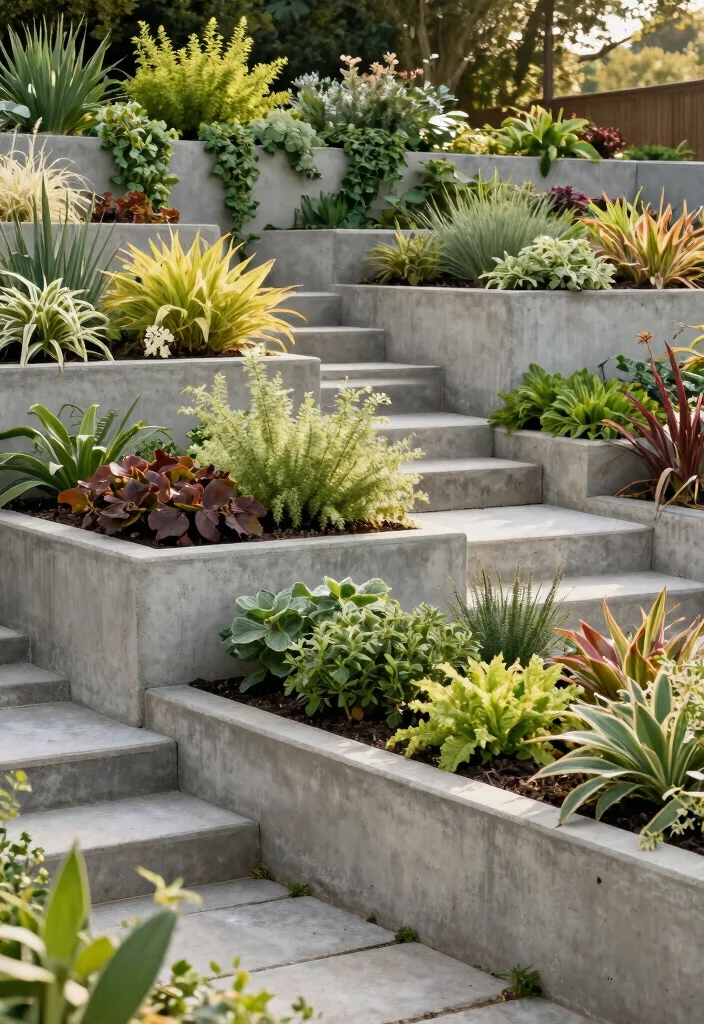
Looking to make the most of your vertical space? Tiered concrete raised beds are a fantastic way to create a dynamic garden layout while accommodating a diverse range of plants. By stacking beds at varying heights, you can develop micro-climates that suit different plant needs.
This approach not only enhances drainage but also improves accessibility for maintenance tasks. Different heights can help tailor sunlight exposure, making gardening easier and more successful.
Consider these tips for your tiered design:
– Use various materials like wood to connect tiers visually
– Plant moisture-loving varieties in lower tiers
– Utilize drought-resistant plants in the upper tiers for efficiency
Creating a tiered garden will not only look stunning but also make your gardening experience more enjoyable and productive.
Fun fact: tiered concrete raised beds can boost usable planting space by up to 40% without expanding your footprint. In urban yards, these concrete raised beds create micro-climates, improve drainage, and make maintenance twice as easy.
5. Curved Concrete Beds for Softness
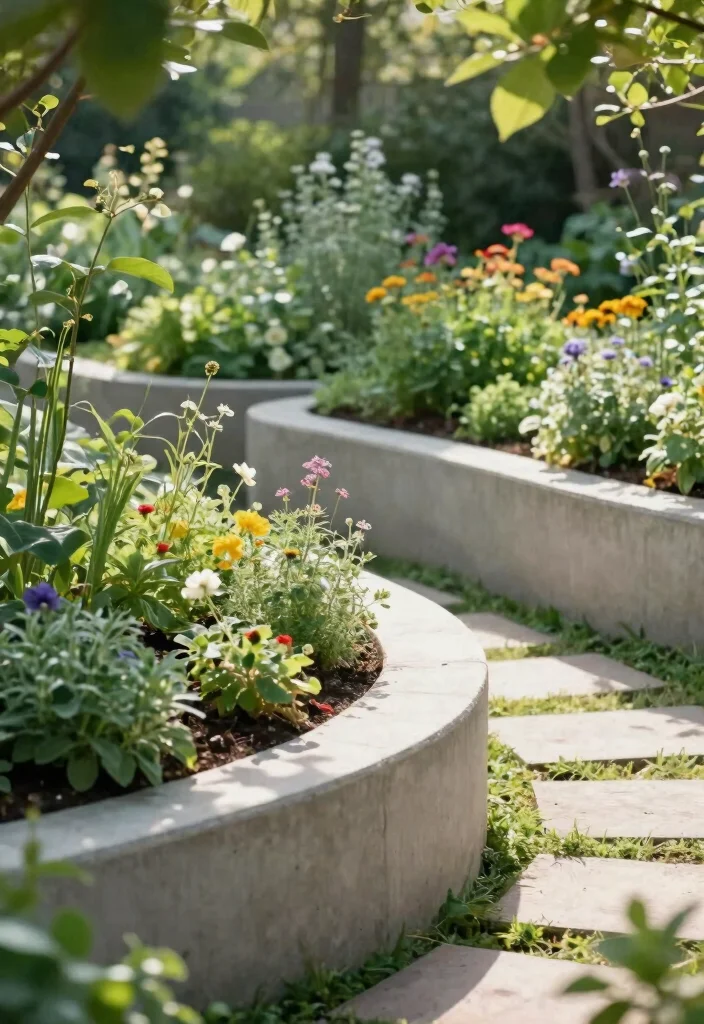
Want to soften the edges of your garden? Curved concrete raised beds introduce flowing shapes that create a calming atmosphere, breaking the rigidity of straight lines. These gentle curves enhance the organic feel of your garden and invite exploration.
Curved beds are perfect for guiding visitors through your outdoor space, making it feel larger and more open. You can mix a variety of plants to heighten the serene vibe of your garden.
To enhance your design:
– Use varying plant heights to emphasize the curves
– Incorporate colorful blooms for visual interest
– Create pathways that lead visitors through the curves
With these beds, your garden will exude a peaceful ambiance, encouraging relaxation and enjoyment.
Fun fact: curved concrete raised beds guide rainwater and foot traffic, creating a calmer garden in as little as 15 minutes. Start with a gentle arc and mix plant heights for a softer, more open space. Curved beds turn rigid concrete into welcoming, practical landscape features.
6. Multi-Section Concrete Beds
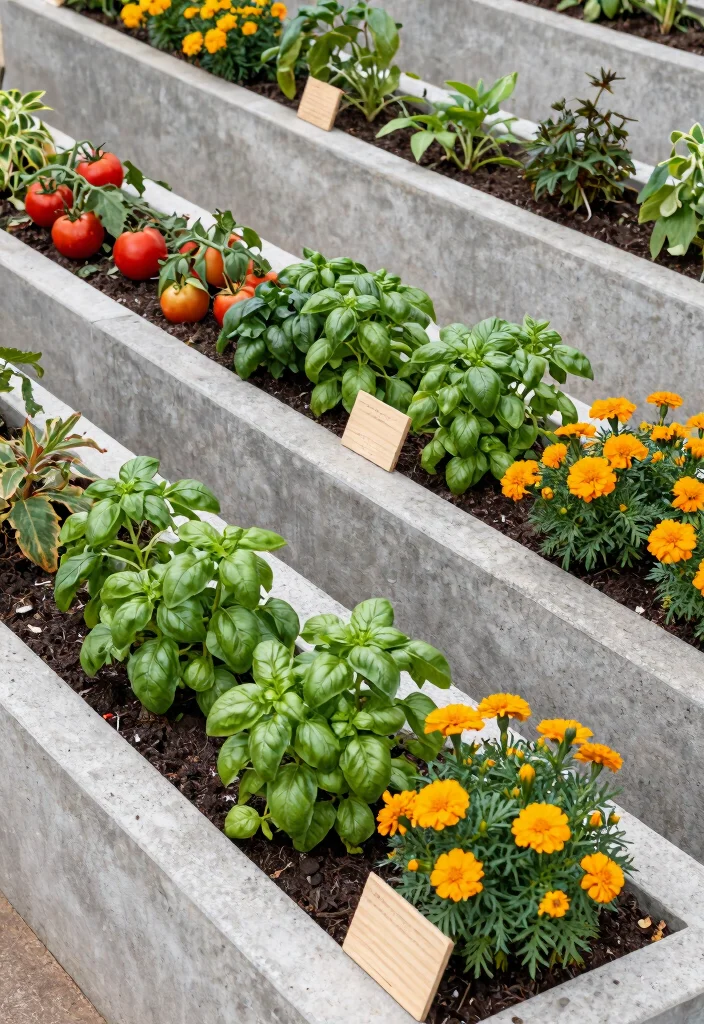
Do you love experimenting with different plants? Multi-section concrete raised beds let you cultivate an array of vegetables, herbs, and flowers all in one place. Dividing a larger bed into distinct sections makes planting organized and maintenance easier.
Using dividers, you can keep plants separate while creating a visually appealing layout. This strategy also allows for effective crop rotation and companion planting.
Consider these organization tips:
– Use concrete or natural materials for partitions
– Label each section for easy identification
– Keep a journal to track plant success in each area
These multi-section beds will simplify your gardening efforts and maximize your growing potential.
7. Artistic Concrete Designs
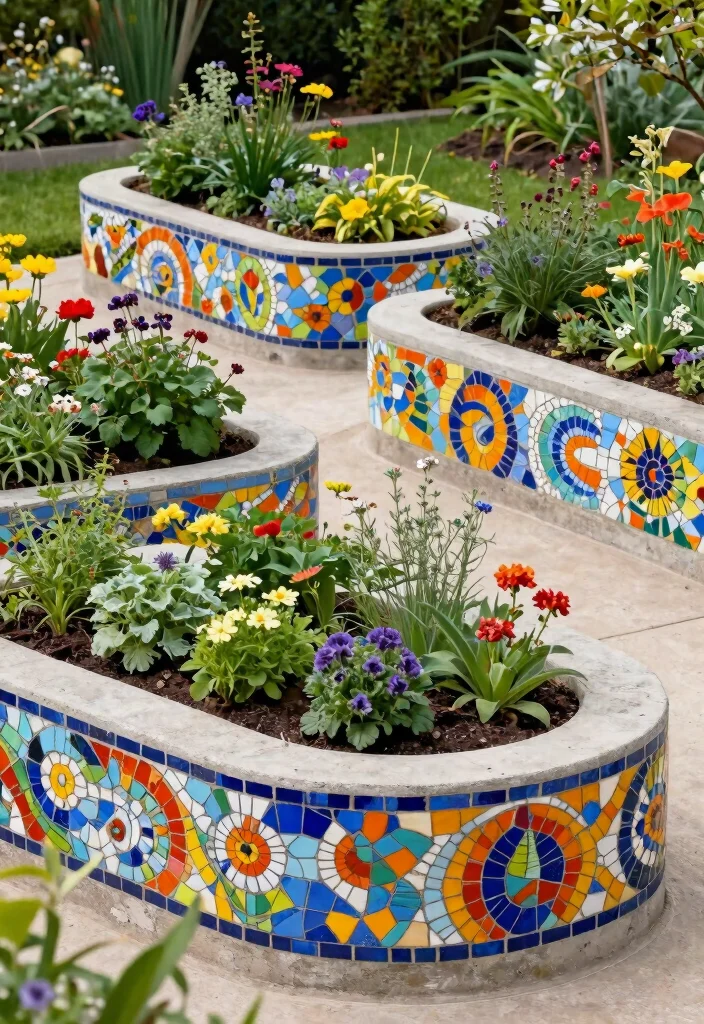
Ready to express your creativity in the garden? Artistic concrete raised beds can become stunning focal points that showcase unique designs and textures. These beds not only enhance your garden’s beauty but also reflect your personal style.
Incorporate colorful mosaics, intricate patterns, or stamped concrete to create a visually captivating environment. Artistic designs can transform your space into a charming retreat.
Here are some creative ideas:
– Use recycled materials for added texture
– Experiment with different finishes for unique looks
– Highlight specific plants with artistic elements
With these artistic beds, your garden will be a vibrant reflection of your personality and creativity.
8. Vertical Concrete Garden Walls
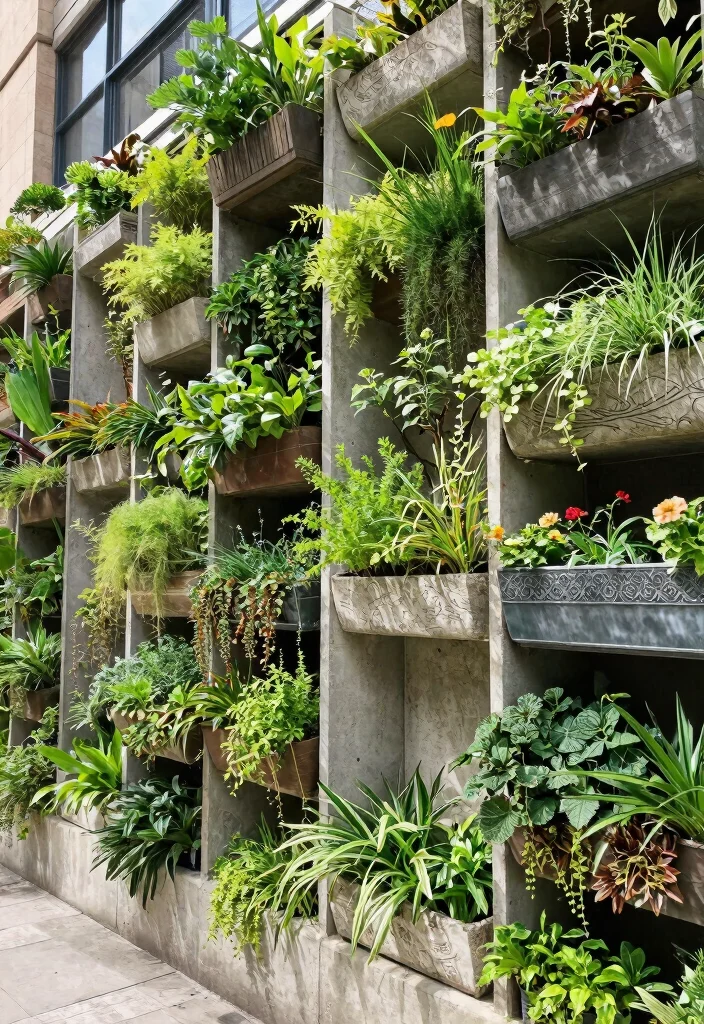
Want to maximize your gardening space? Vertical concrete garden walls are perfect for small outdoor areas, providing a stunning backdrop for your plants. These structures not only save space but also enhance your garden’s aesthetic appeal.
Vertical planting improves air circulation and sunlight exposure for all plants, making your garden healthier. Incorporating trellises or wall-mounted pots can further enhance the vertical gardening experience.
Consider these enhancements:
– Add a drip irrigation system for efficient watering
– Pair with seating for a cozy nook
– Use decorative elements to create an inviting atmosphere
With vertical walls, you’ll transform limited space into a flourishing and beautiful garden oasis.
Fun fact: vertical concrete garden walls can double your planting space in a small patio. They boost air circulation and sunlight exposure, making your concrete raised garden bed ideas both practical and stunning.
9. Eco-Friendly Concrete Solutions
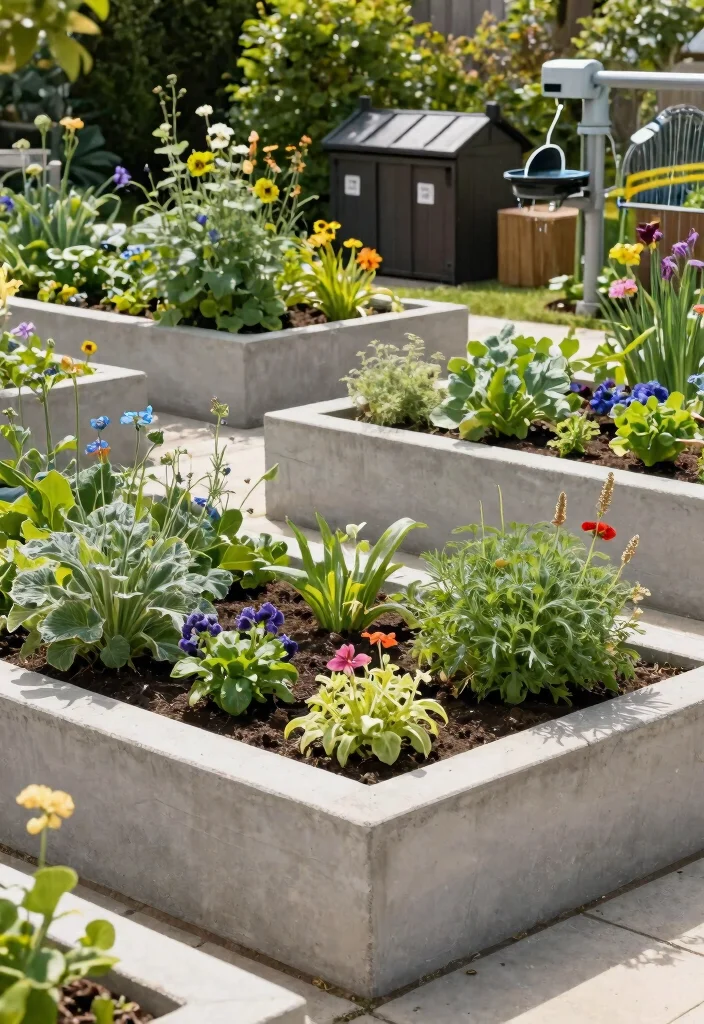
Looking to make environmentally conscious choices? Eco-friendly concrete raised beds combine style with sustainability, allowing you to garden responsibly. These beds are often made from recycled materials, reducing your environmental footprint.
Opting for eco-friendly options means enjoying durability with minimal maintenance and fewer replacement costs. Incorporating these beds into your garden enhances your space while promoting a sustainable ethos.
Here are some eco-friendly practices:
– Choose concrete mixes with recycled aggregates
– Use environmentally friendly sealants for protection
– Pair with organic gardening techniques for a thriving garden
With eco-friendly solutions, you’ll cultivate a beautiful garden that aligns with your values, creating a greener future.
Conclusion
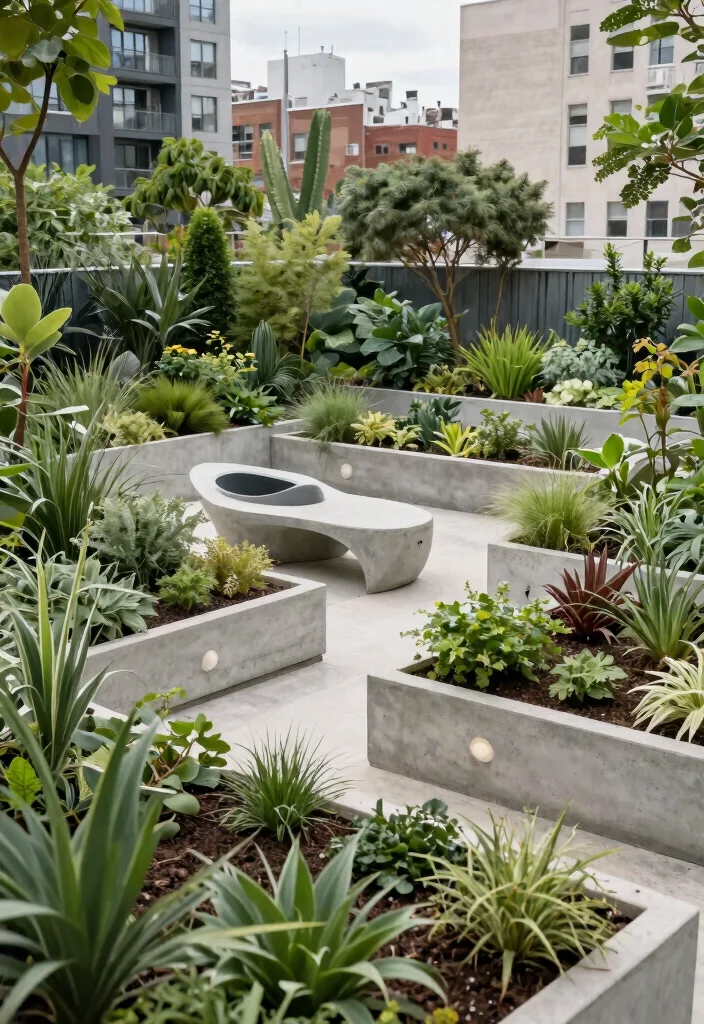
Concrete raised garden beds are not just functional; they are a canvas for creativity and innovation, allowing urban gardeners to express their style while enhancing their green spaces.
With so many designs to choose from, there’s no reason not to start your own concrete garden project today. Explore these ideas and bring your vision to life, and enjoy the satisfaction of nurturing your plants in a modern, durable home.
Let your garden tell your story, one concrete bed at a time.
Note: We aim to provide accurate product links, but some may occasionally expire or become unavailable. If this happens, please search directly on Amazon for the product or a suitable alternative.
This post contains Amazon affiliate links, meaning we may earn a small commission if you purchase through our links, at no extra cost to you.
Frequently Asked Questions
What are the key advantages of using concrete raised garden beds in urban spaces?
Concrete raised garden beds in urban spaces offer standout durability, a clean modern aesthetic, and long-lasting performance. They’re a staple in concrete garden design and are ideal for durable raised beds that stand up to weather and heavy use. With the right form, you can customize height, width, and edging to fit sidewalks, balconies, or rooftops—perfect for outdoor garden projects and sustainable gardening options. If you’re exploring concrete raised garden bed ideas, start by planning drainage, choosing a weather-resistant finish, and sizing the bed to your tending comfort.
How can I design a durable concrete raised bed for a small patio or balcony?
Begin with a practical plan: aim for a height around 18–24 inches for comfortable tending, rounded edges to prevent chipping, and a stable footing to resist frost movement. Use reinforced concrete or sturdy block construction, and lay a shallow base with gravel for drainage. Install a moisture barrier or liner if you’ll grow edibles, and seal with a food-safe finish if needed. Keep the footprint compact and modular so the bed doesn’t overwhelm the space. This approach is a core part of concrete garden design and a strong example of modern gardening solutions for tight urban spaces.
Are concrete raised beds safe for edible plants and sustainable gardening?
Yes, with proper materials and finishes. To keep edibles safe, use a food-safe interior sealant or install a liner, and fill with a soil mix suitable for vegetables. Avoid reactive coatings and opt for inert fills that won’t affect soil chemistry. Ensure good drainage to prevent root rot, and monitor pH periodically—concrete tends to be alkaline, so you may need to adjust with organic matter. Overall, concrete raised beds align well with sustainable gardening options and are a practical choice for urban edible gardens when you select safe sealants and appropriate soil.
What maintenance is needed to keep concrete raised beds lasting longer?
To maximize lifespan: inspect for cracks annually and patch promptly with a suitable concrete repair product; reseal every 3–5 years to protect against moisture ingress; keep drainage clear of leaves and sediment; avoid heavy impact on edges to prevent chips. Refresh soil each season and consider a mulch layer to moderate temperature swings. In colder climates, winterize by ensuring drainage and using frost-appropriate designs. Regular care keeps your durable raised beds looking good and performing well for years of outdoor garden projects.
What are some modern concrete raised bed ideas that fit different spaces and climates?
There are plenty of practical options that suit urban spaces and varying climates. For example, try modular block beds that you can reconfigure on a balcony; a built-in bench with planter cores for seating and soil; long concrete troughs with drip irrigation for herbs along a railing; or vertical stacks of poured panels to maximize sun and airflow. Finish with a weather-friendly stain or texture to match architecture while staying low-maintenance. These are classic examples from 9 Modern Concrete Raised Garden Bed Ideas that you can adapt to your space and outdoor garden projects.