![13 Lush Flower Garden with Pond Ideas [Spring Blooms]](https://homedreamly.com/wp-content/uploads/2026/04/13-Lush-Flower-Garden-with-Pond-Ideas-Spring-Blooms.webp)
Spring is here, and that means it’s time to indulge in the beauty of lush flower gardens. If you’ve been craving a serene escape filled with vibrant blooms and the soothing sound of water, then you’re in for a treat. Creating a flower garden with a pond is not just about adding aesthetics; it’s about crafting an eco-friendly sanctuary that supports local wildlife and brings peace to your outdoor space. This post is designed to spark your imagination and help you create the garden of your dreams.
If you’re someone who loves gardening or simply enjoys the beauty of nature, this guide is for you. You might be a seasoned gardener looking to enhance your space or a beginner eager to dive into the world of gardening. Either way, you’ll find plenty of inspiration here. I’ve gathered 13 stunning flower garden with pond ideas that are colorful, inviting, and perfect for your spring landscape.
Get ready to discover ideas that will not only beautify your garden but also provide a habitat for butterflies and pollinators. You’ll learn about unique pond landscaping ideas, seasonal flower rotations, and outdoor decor that enhances your garden’s charm. Each idea is eco-friendly, ensuring that your garden remains a haven for both you and the environment. Let’s dig in!
Key Takeaways
– Explore unique designs like floating flower islands and vertical gardens to add depth and interest to your pond area.
– Consider native flower planting to create a vibrant garden that supports local wildlife and requires less maintenance.
– Learn about seasonal flower rotations to keep your garden blooming throughout the spring and beyond, ensuring continuous color and life.
– Incorporate eco-friendly garden decor elements to enhance your space while remaining kind to the environment.
– Join in community garden initiatives to connect with fellow gardening enthusiasts and share ideas for creating beautiful, sustainable outdoor spaces.
1. Floating Flower Islands
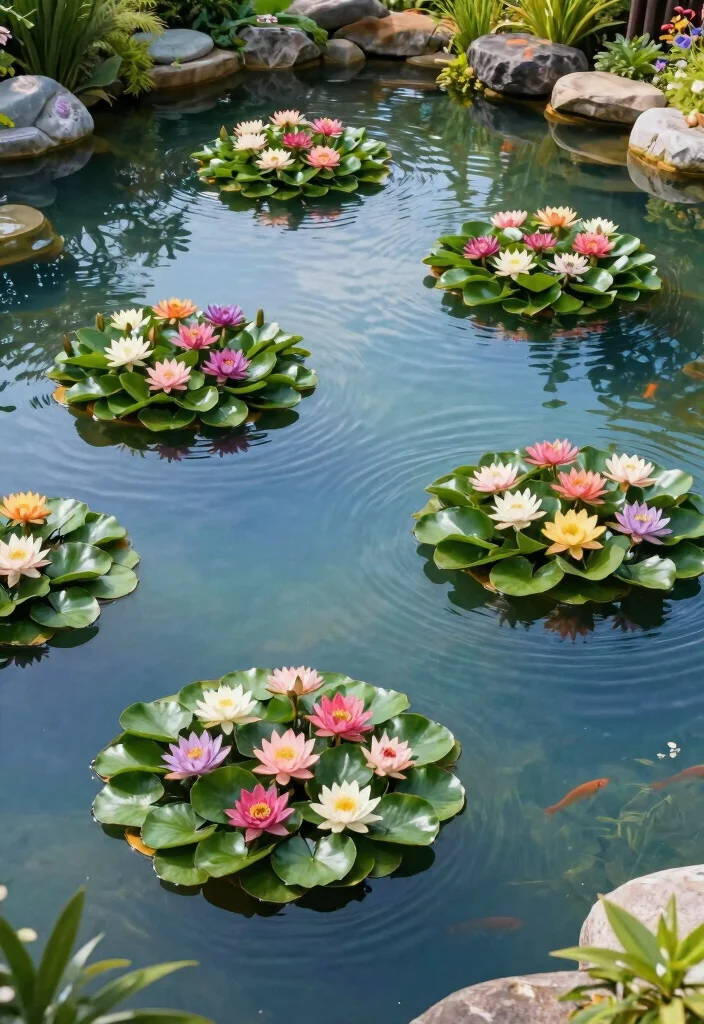
Imagine transforming your pond into a stunning focal point with floating flower islands! These charming, portable planters can be anchored to create a vibrant display of blooms dancing above the water. By selecting native aquatic plants like water lilies or lotus flowers, you not only enhance the visual appeal but also create a welcoming habitat for local wildlife.
Start by mixing colors and heights in your flower selection for a lively, dynamic look. Choose eco-friendly materials for your floating islands to ensure they blend beautifully with nature. Here are some helpful tips:
– Use a lightweight base to keep the islands afloat.
– Add moisture-loving plants for a stunning arrangement.
– Securely anchor the islands to prevent drifting.
Floating islands provide a unique way to enjoy gorgeous spring blooms while supporting local frogs and other pond life. Your created oasis will be the perfect spot for relaxation on warm spring afternoons.
2. Curved Pathways to the Pond
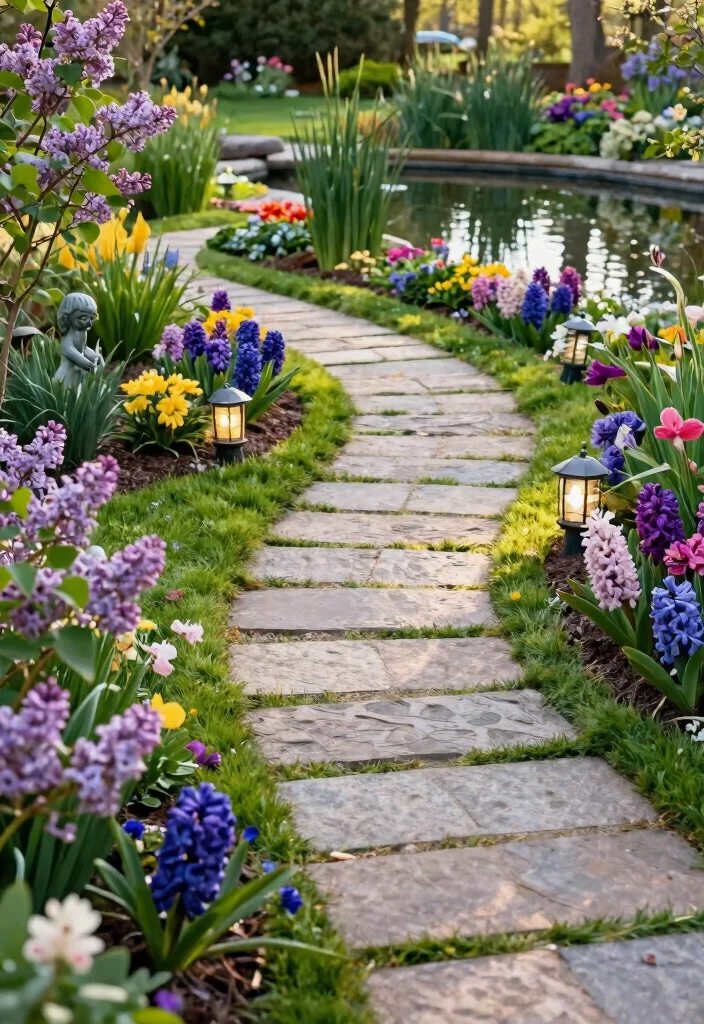
Curved pathways can bring an enchanting flow to your flower garden leading to the pond. Instead of straight paths, consider winding walkways made from natural stones or recycled materials that invite visitors to explore a sensory feast of colorful blooms and lush greenery.
Along these paths, plant fragrant spring flowers like lilacs and hyacinths to engage the senses. Choose low-maintenance native plants that attract pollinators, making your garden eco-friendly. Here’s how to craft inviting pathways:
– Use materials that blend naturally with the landscape, such as gravel or flagstone.
– Line the paths with flowering plants for vibrant bursts of color.
– Add decorative elements like garden art or solar lanterns for a magical touch at night.
Curved pathways not only create visual interest but also spark curiosity, making your garden feel spacious and whimsical.
3. Native Flower Planting
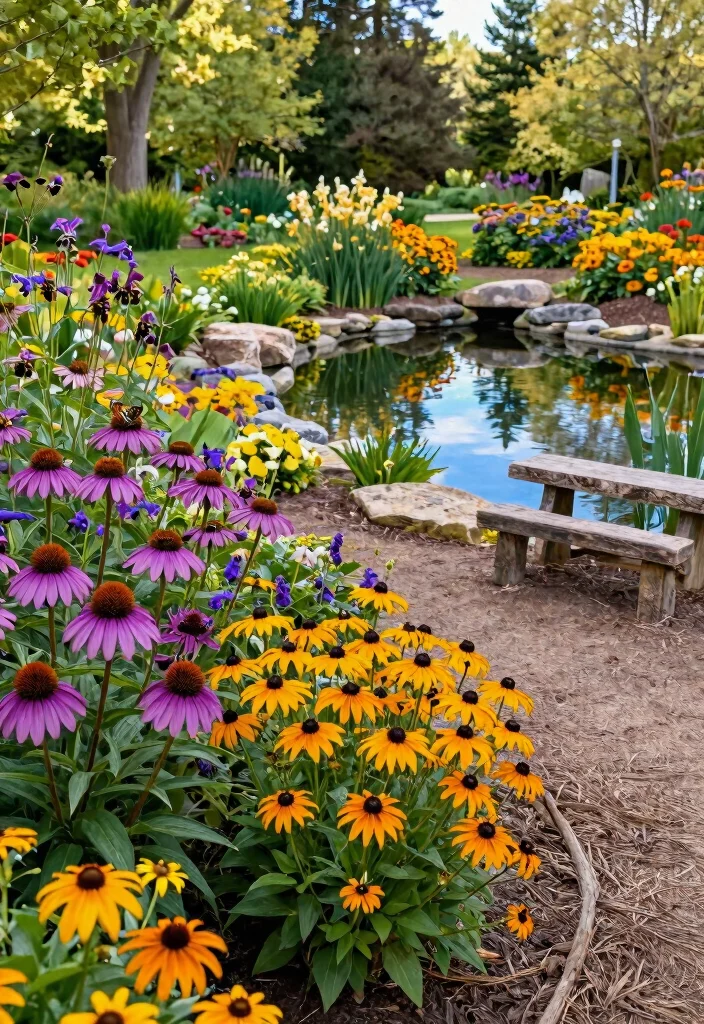
Planting native flowers is a smart way to cultivate a sustainable ecosystem in your garden. These plants thrive in your local climate and soil, requiring less maintenance and resisting pests more effectively. Consider incorporating spring blooms such as purple coneflowers, bee balm, or black-eyed Susans near your pond.
These native flowers will attract beneficial pollinators and enhance your garden’s overall health. Here are some strategies for maximizing your native flower garden:
– Group native flowers to mimic natural habitats.
– Mix different heights and colors for visual variety.
– Provide a water source for wildlife to thrive.
By nurturing a diverse ecosystem, you’ll enjoy the vibrant beauty of your flower garden while supporting local wildlife and pollinators.
Fun fact: Native flowers attract up to 70% more pollinators and use less water. Plant purple coneflowers, bee balm, and black-eyed Susans near your pond to boost biodiversity and keep your flower garden with pond ideas thriving.
4. Water Features with a Twist
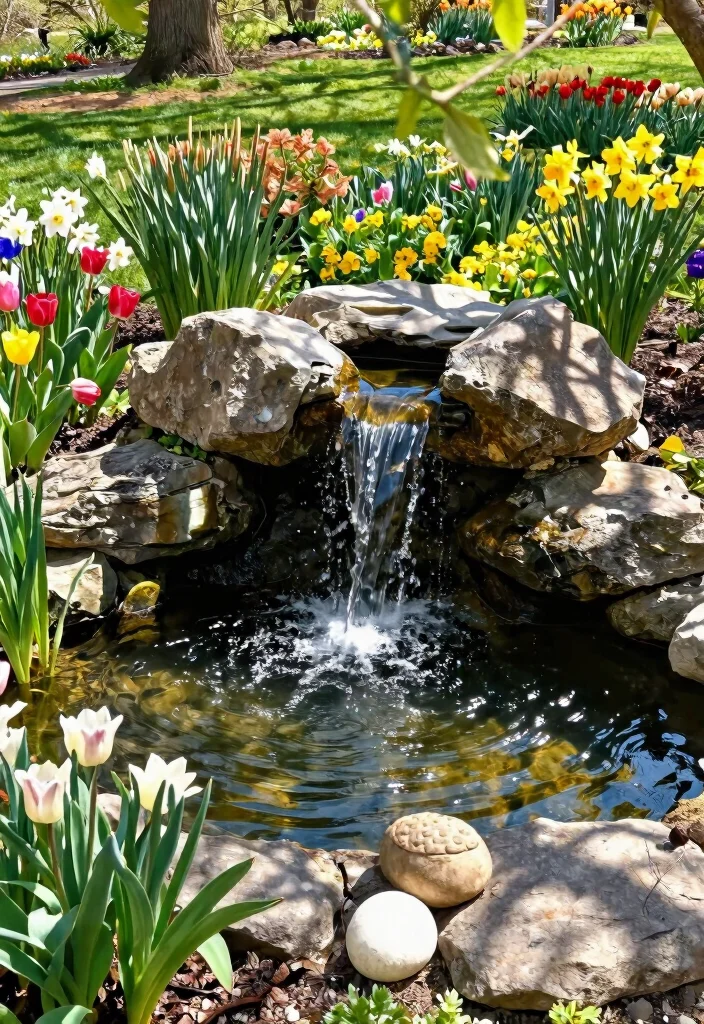
Enhance the charm of your pond with creative water features! Instead of traditional fountains, think about a cascading water wall or a natural rock waterfall that mimics the sound of serene streams. These features add beauty and soothing sounds, perfect for relaxation.
Surround these elements with spring flowers to create a lush, inviting atmosphere. Consider these ideas:
– Use large stones to create a natural waterfall that blends seamlessly with the landscape.
– Add aquatic plants like rushes or reeds around the feature for softness.
– Incorporate solar-powered pumps for eco-friendly water circulation.
With a little creativity, your pond area can become a stunning focal point that captivates the eye and enriches your garden’s ecosystem.
5. Eco-Friendly Garden Decor
Elevate your flower garden’s aesthetic while being kind to the environment with eco-friendly decor. Consider using upcycled materials for garden art or furniture. For instance, old wooden pallets can be transformed into benches or vertical gardens, while glass bottles can become colorful borders or ornaments.
For your spring blooms, think about flower pots made from biodegradable materials that break down naturally. Here are some creative decor ideas:
– Use reclaimed wood for raised garden beds or trellises.
– Create birdhouses from recycled materials to attract local birds.
– Hang wind chimes made from natural materials for soothing sounds.
By choosing eco-friendly decor, you not only beautify your garden but also contribute to a sustainable future for our planet.
Designing a flower garden with pond ideas can be gorgeous without waste. Start small with upcycled pallets as benches or vertical planters, and choose biodegradable pots for spring blooms—practical, affordable, and kind to the planet.
How To Choose the Right Flower Garden with Pond Ideas
Choosing the perfect flower garden with a pond requires careful thought and planning. You want a design that not only looks beautiful but also functions well in your outdoor space. Here are some key factors to help you decide:
1. Size of Your Space
Before anything else, measure your garden area. Knowing the dimensions helps you choose the right flower garden design and pond size. A large pond may overwhelm a small yard, while a tiny pond could get lost in a bigger garden. Aim for balance!
2. Types of Flowers
Consider what spring flowers you want to grow. Do you prefer perennials or annuals? Native flowers often do well because they’re adapted to your climate. Choose a color palette that matches your style, whether it’s bright and bold or soft and subtle.
3. Pond Features
Think about the pond’s features. Would you like a waterfall or a fountain? These garden water features not only look nice but also circulate water and keep it fresh. This is important for both the plants and any fish you may want to add.
4. Eco-Friendly Practices
If sustainability is important to you, look into eco-friendly garden decor and maintenance. Use native plants that require less water and fewer chemicals. Rainwater collection systems can also help you water your garden without relying on municipal sources.
5. Budget Considerations
Setting a budget is crucial. Include costs for plants, soil, pond materials, and any accessories like lighting or decor. You can save money by doing some work yourself or sourcing plants locally.
6. Long-Term Maintenance
Consider how much time and effort you can commit to maintaining your garden and pond. Some flower garden designs require more upkeep than others. Think about seasonal flower rotations and the potential for weed growth. If you prefer lower maintenance, opt for easy-care plants and a simple pond design.
Pro Tip: Always visualize your final design before starting. You can use garden design software or sketch it out on paper. This will help you see how the elements fit together and make adjustments before you begin planting. Taking the time to plan will lead to a stunning garden oasis!
6. Butterfly and Pollinator Gardens
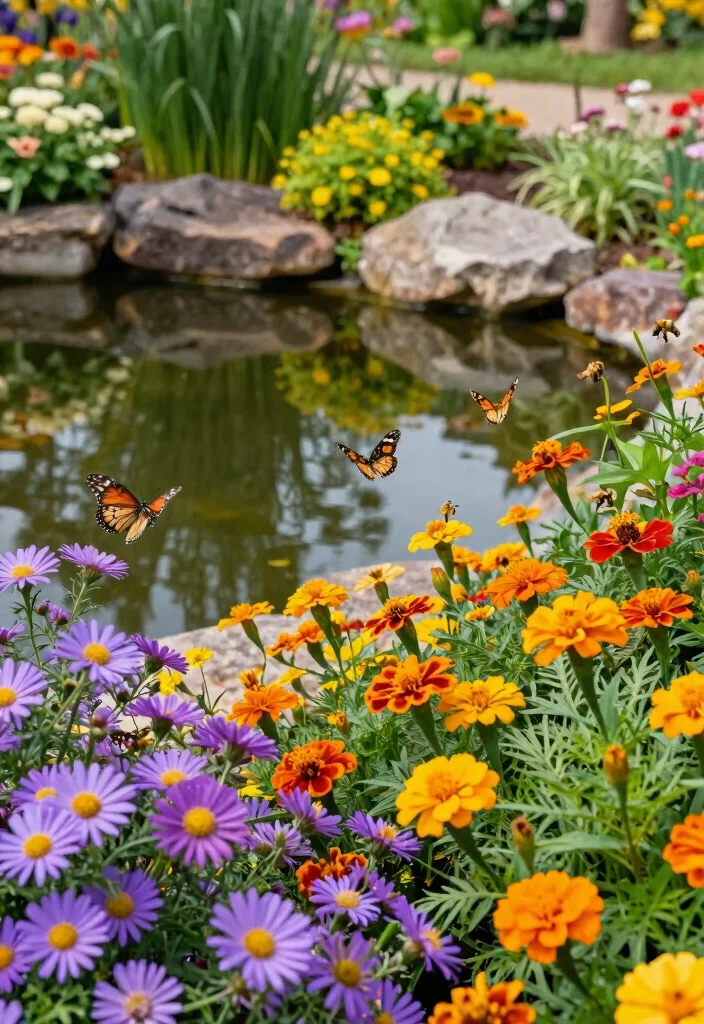
Design a butterfly and pollinator garden with flowers that attract beneficial insects. Use a diverse range of spring blooms like asters, zinnias, and marigolds near your pond. These vibrant flowers not only bring joy but also support the ecosystem by inviting butterflies and bees.
To create an effective pollinator garden:
– Include plants with varying bloom times for consistent food sources.
– Avoid chemical pesticides that harm beneficial insects.
– Create sheltered spots for pollinators to rest, such as small rock piles or native grasses.
This habitat enhances the beauty of your garden while playing a vital role in maintaining biodiversity and supporting local ecosystems.
7. Seasonal Flower Rotations
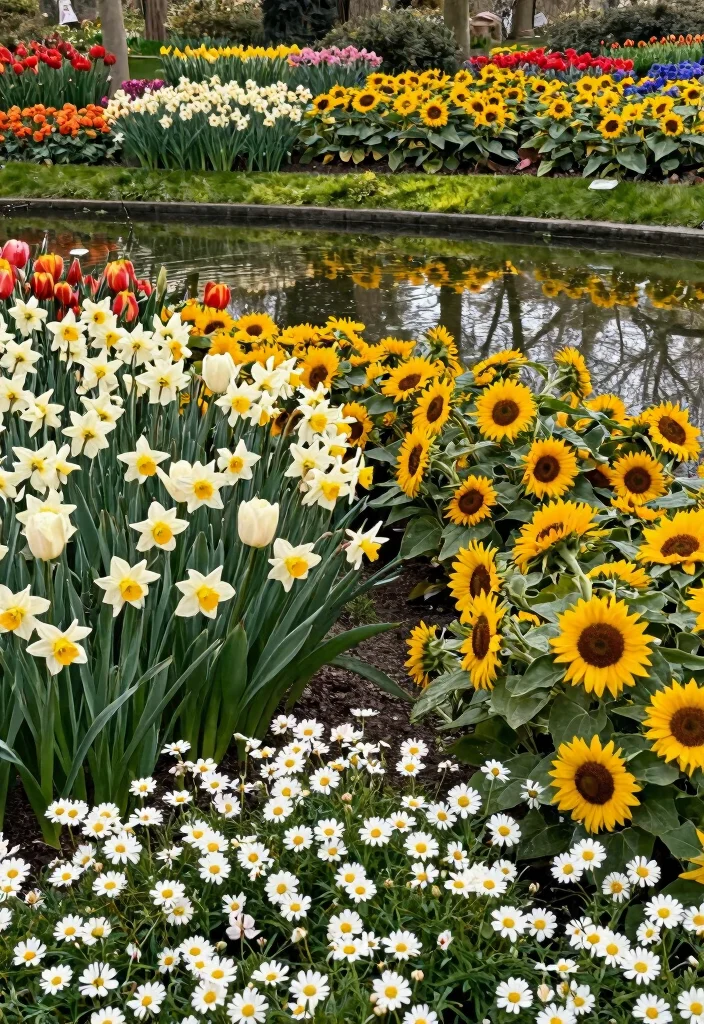
Maintain a flourishing flower garden by implementing seasonal flower rotations. By selecting different blooms for each season, you’ll ensure continuous color and interest around your pond.
For spring, focus on early bloomers like tulips, daffodils, and pansies. As spring transitions into summer, introduce species such as sunflowers, daisies, and cosmos. Here’s how to successfully rotate your flowers:
– Plan your flower beds to ensure some blooms are always in flower.
– Use companion planting techniques to enhance growth and control pests.
– Track bloom times to know when to plant each variety.
With thoughtful planning, your flower garden will transform seasonally, making the pond area a year-round delight.
8. Vertical Gardens Near the Pond
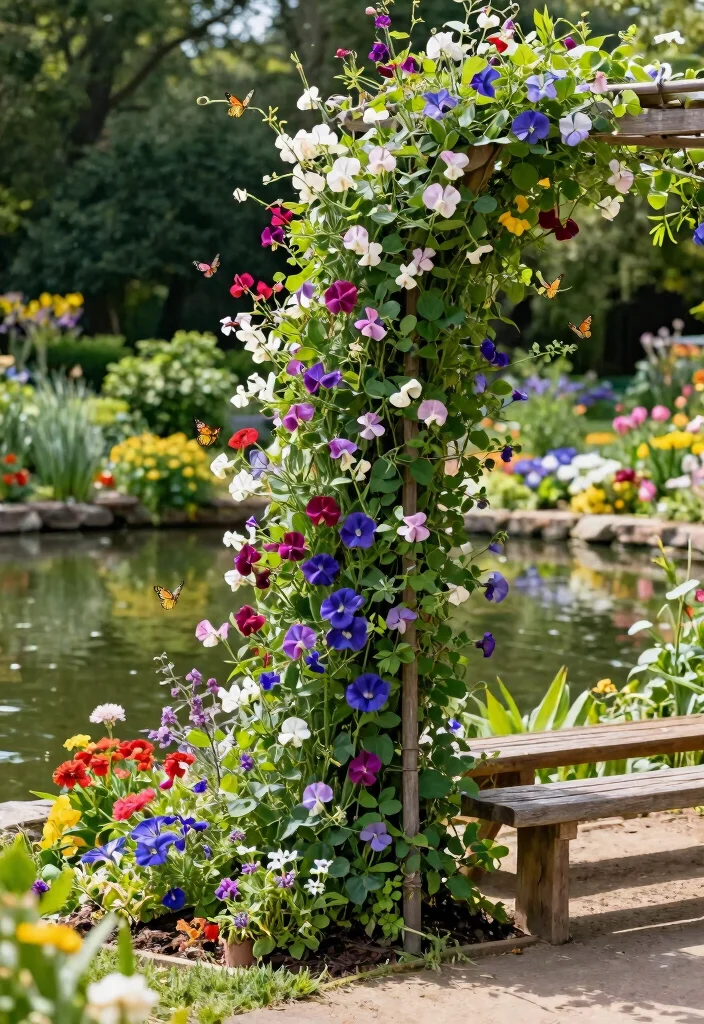
Maximize your space and create stunning visuals by adding vertical gardens near your pond. These delightful structures can be built with trellises or wall planters, allowing you to grow climbing flowers like sweet peas or morning glories. Vertical gardens save space while adding depth and texture to your garden design.
Consider these elements in your vertical garden:
– Use eco-friendly materials for construction, like reclaimed wood.
– Select a variety of flowering plants for a dynamic display.
– Incorporate trailing plants that spill over the edges for a lush effect.
This vertical approach can create a breathtaking floral display that enhances the beauty of your pond area while efficiently utilizing limited garden space.
9. Color-Themed Garden Designs
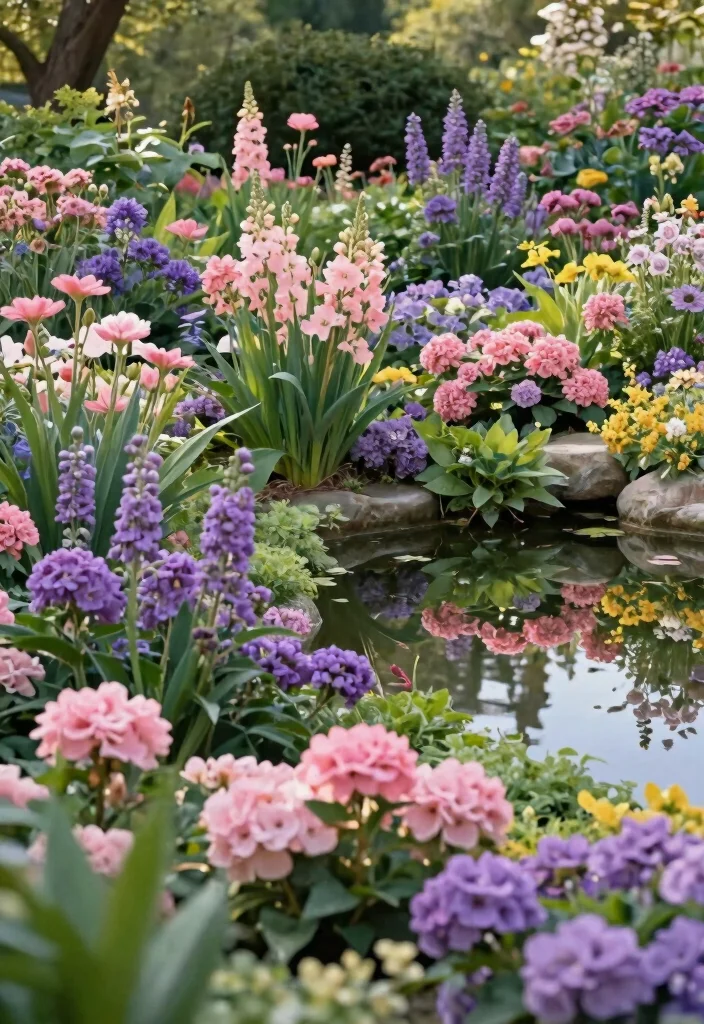
Elevate your flower garden by embracing a color-themed design. Choose a soothing palette of pastels or vibrant hues that harmonize with your pond and surrounding landscape. For a cohesive look, select flowers that bloom in similar shades, such as pinks and purples, or opt for bold reds and yellows.
To create a captivating color-themed garden:
– Stick to two or three primary colors for visual harmony.
– Include varying flower types and heights to add depth.
– Utilize foliage colors, like dark greens or variegated leaves, to contrast with blooms.
This approach beautifies your garden and creates a serene atmosphere around your pond, perfect for relaxation and enjoyment.
Fact: Limiting your color palette to two or three hues can cut visual clutter by up to 30% in a flower garden with pond ideas. Near the water, color-themed garden designs stay cohesive as you vary heights and foliage. Try pastels for calm, or bold reds and yellows for impact.
10. Edible Flower Gardens
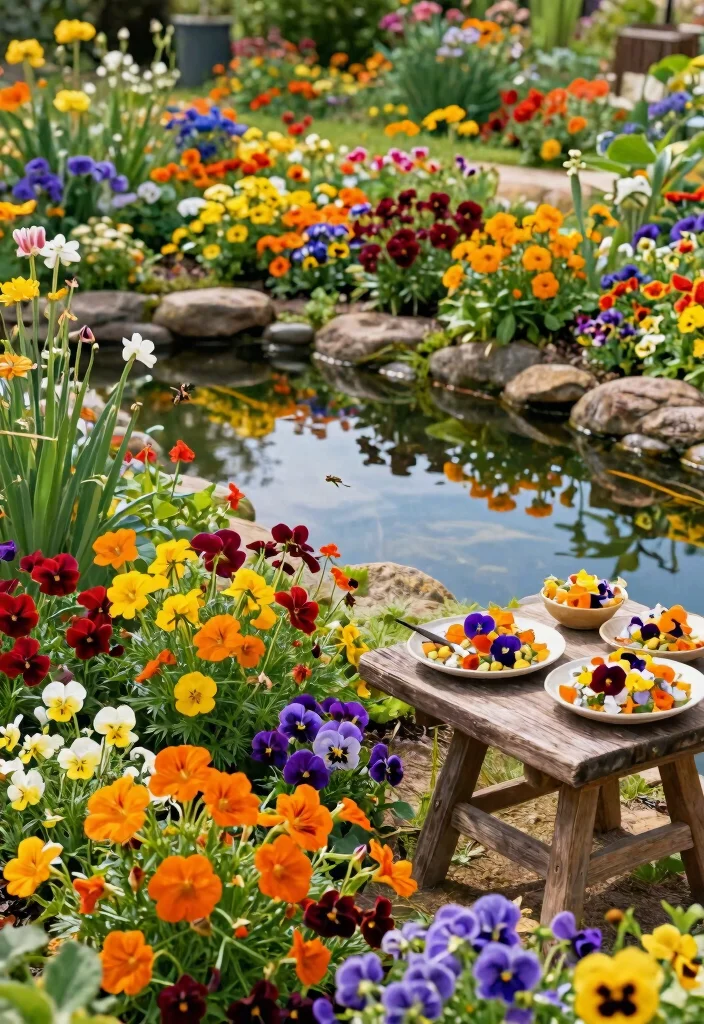
Why not add a burst of flavor to your garden? An edible flower garden can be both beautiful and practical. Incorporate edible blooms like nasturtiums, pansies, or calendula near your pond to create a lively atmosphere while offering culinary delights.
Edible flowers come with amazing benefits:
– They attract pollinators, enhancing your garden’s ecosystem.
– Many are easy to grow and require similar care as traditional flowers.
– Edible blooms can be used in salads, teas, and garnishes, adding a unique twist to your dishes.
Plan your edible flower garden by pairing them with companion plants that thrive in similar conditions. Enjoy the beauty and delicious rewards of your handiwork while nurturing your pond’s ecosystem.
11. Zen Garden Elements
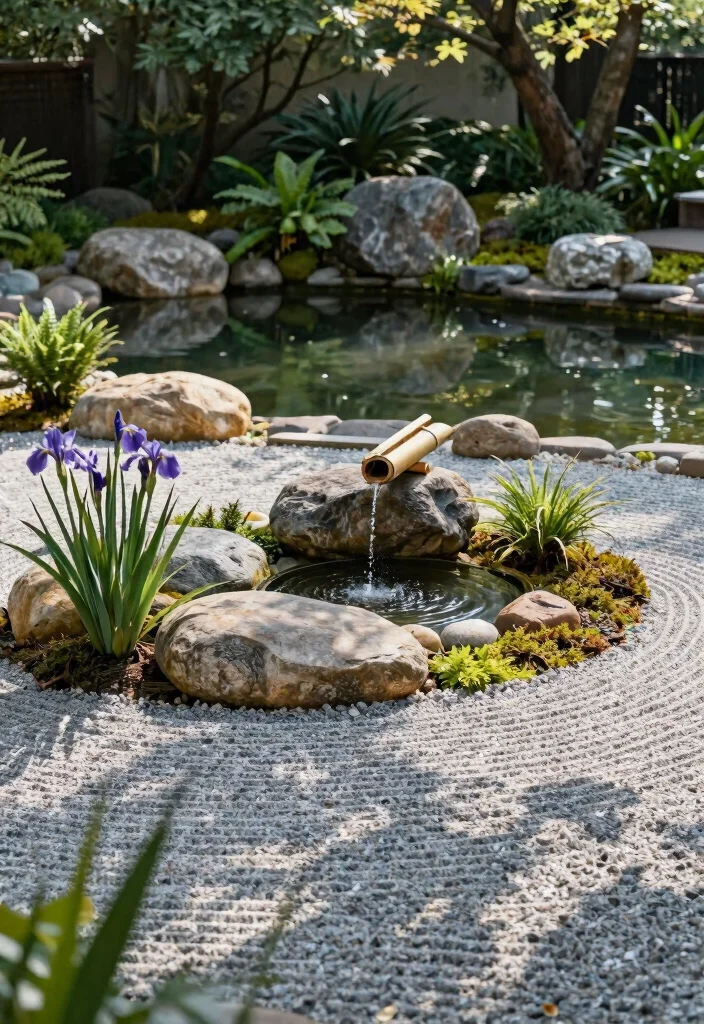
Create a peaceful oasis by incorporating Zen garden elements into your flower garden by the pond. Simple features such as smooth stones, bamboo, and raked gravel can transform your space into a calming retreat. Pair these with low-maintenance plants like irises and ferns to complement the serene setting.
Key elements for a Zen garden include:
– Use varied stone sizes for visual interest.
– Incorporate a small bamboo fountain for gentle water sounds.
– Create a walking path with sand or gravel leading to your pond.
This tranquil environment not only beautifies your garden but also promotes mindfulness and relaxation, making it the perfect spot to unwind amidst nature.
12. Natural Shade Solutions
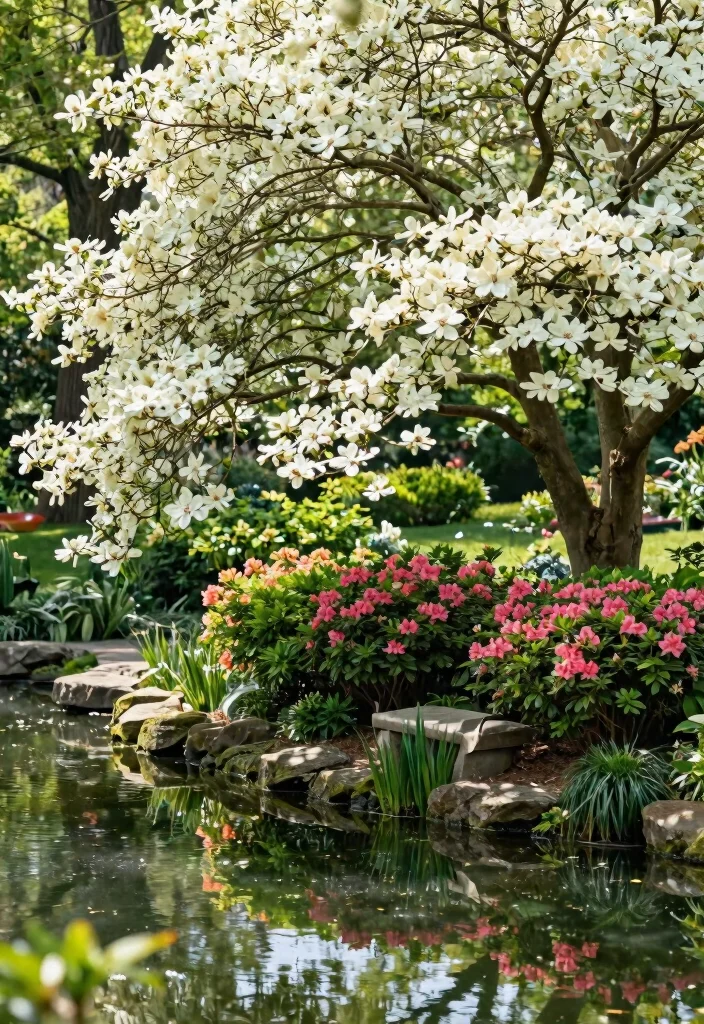
Shade can enhance your garden, especially as spring blooms transition into the warmer months. To create a comfortable environment near your pond, consider natural shade solutions such as strategically placed trees or large shrubs.
Flowering trees like dogwoods or magnolias not only provide shade but also add stunning floral displays in spring. Low-growing shrubs like azaleas can also introduce softness. Here are some tips for natural shade solutions:
– Plant trees and shrubs to enhance your garden’s layout.
– Choose plants that thrive in your specific climate.
– Ensure that your shade solutions do not block sunlight to aquatic plants.
Adding natural shade will create a welcoming space to relax by your pond during warm spring days, allowing you to enjoy the beauty and tranquility of your garden.
13. Community Garden Involvement
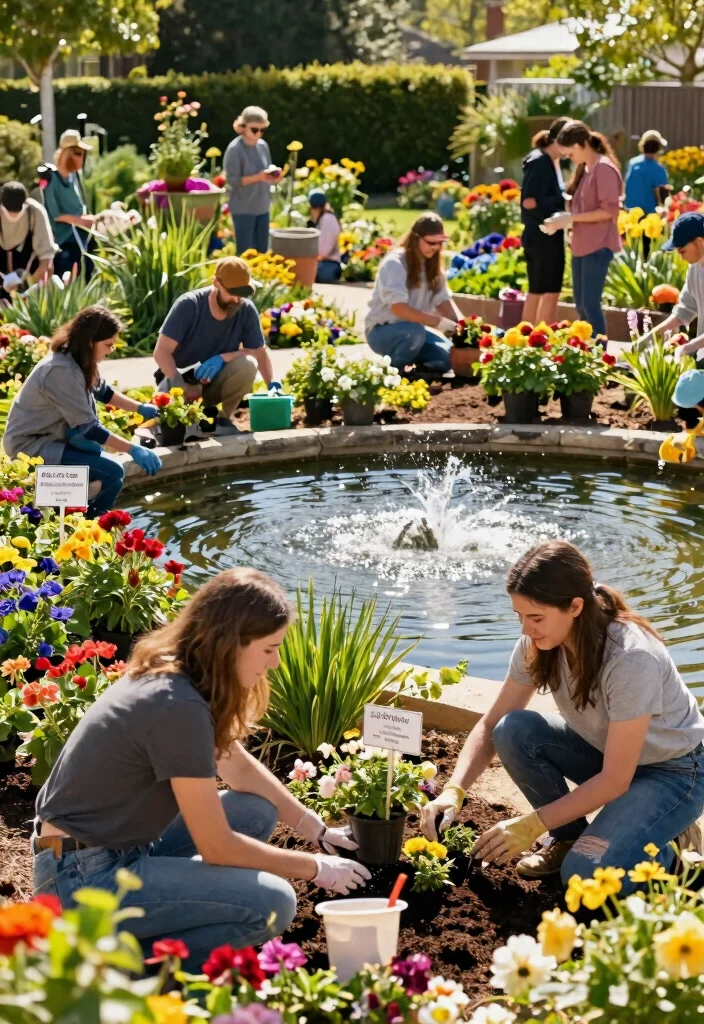
Consider getting involved in or starting a community garden focused on eco-friendly practices. Collaborating with neighbors to create a shared flower garden with a pond can foster community spirit and promote sustainable gardening!
Engage with your community by:
– Hosting flower planting days to encourage participation.
– Sharing knowledge about native plants and eco-friendly gardening techniques.
– Organizing workshops on water conservation and pond maintenance.
This collective effort not only beautifies your surroundings but also builds lasting relationships and cherished memories, making your garden a beloved part of the community.
Conclusion
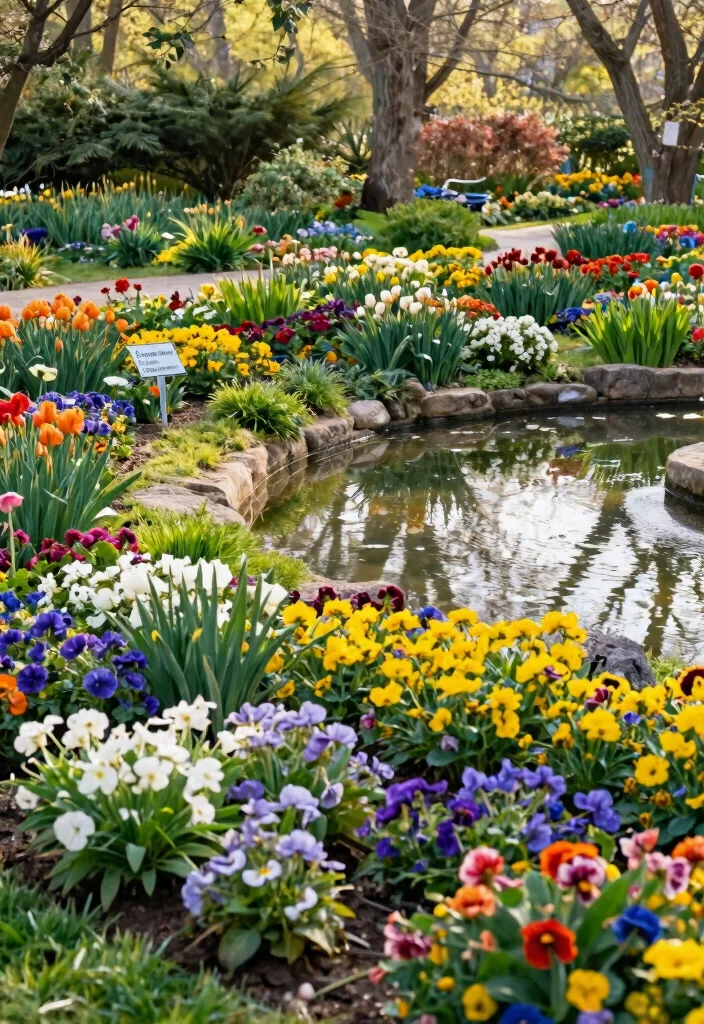
Creating a lush flower garden with a pond can be an incredibly rewarding experience, both for you and the local ecosystem. These 13 ideas not only beautify your outdoor space but also promote sustainability and biodiversity. By incorporating unique elements and eco-friendly practices, your garden can become a sanctuary of color and life.
Let these inspirations guide you to design an enchanting oasis that reflects your personality and values. Dive into the world of gardening, enjoy the tranquility of your flowers and pond, and remember to share your journey with others!
Note: We aim to provide accurate product links, but some may occasionally expire or become unavailable. If this happens, please search directly on Amazon for the product or a suitable alternative.
This post contains Amazon affiliate links, meaning we may earn a small commission if you purchase through our links, at no extra cost to you.
Frequently Asked Questions
What are beginner-friendly flower garden with pond ideas for an eco-friendly yard?
Getting started with a flower garden with pond ideas can be simple and eco-friendly. Start with native spring flowers like crocus, daffodil, tulip, and primrose to attract pollinators and reduce water use.
For the pond, keep margins shallow and add natural rocks and a solar-powered fountain to aerate water without wasting energy.
Finish with eco-friendly garden decor like driftwood, recycled timber edging, and mulch to conserve moisture. This approach helps you create a thriving, wildlife-friendly space this spring.
How can I design a flower garden with pond ideas that are eco-friendly and low maintenance?
A practical plan starts with native plants and layered planting to reduce watering needs. Use a rain barrel to collect rainwater for irrigation and mulch heavily to keep soil moist. Incorporate a small pond or bog area with natural edges to provide habitat for wildlife and to help with natural filtration. Avoid chemical pesticides and fertilizers to protect pollinators. For garden decor, choose durable, repurposed materials. In short, focus on eco-friendly flower garden with pond ideas and pond landscaping ideas that work with your climate.
Which spring flowers are best for a pond-adjacent garden?
Try spring blooms like daffodils, crocus, tulips, primroses, and iris near the water’s edge. These spring flowers for gardens light up damp corners and attract pollinators. Pair them with moisture-loving edge plants like marsh marigold and water iris for a lush display that stays low maintenance and keeps the area vibrant through spring.
How can I keep a pond in a flower garden wildlife-friendly and water-safe?
Create gentle, shallow shelves at the pond’s edge so amphibians and butterflies can access the water. Plant margins with native grasses and marginal plants to filter runoff and provide shelter. Use organic mulch and avoid chemical fertilizers and pesticides to protect wildlife. Install a solar-powered pump or aerator to keep water oxygenated and invite beneficial organisms. Regularly remove debris and monitor for algae balance to support healthy garden water features and wildlife.
What affordable outdoor garden decor and garden water features pair well with a flower garden with pond ideas?
To stretch your budget, opt for DIY touches: use local stones to build a simple edging, repurposed wood for a bench, and solar garden lights. For water features, a small solar fountain or a gentle waterfall creates soothing sound as part of garden water features. Add floating planters or lanterns for atmosphere. Surround with practical outdoor garden decor like bird baths, wind chimes, and natural mulch to tie the look together and boost curb appeal.